I keep coming back to Nerja. Every time I think I’ve explored everything this little white village has to offer, I discover something new that makes me want to stay another week. That’s the magic of this place.
Nerja sits between reality and a postcard. The fishing boats still come in early in the morning, the old town smells like fresh bread and oregano, and the locals actually know their neighbors. It’s touristy enough that you’ll find good restaurants and comfortable hotels, but authentic enough that it doesn’t feel like you’ve landed in a theme park. That’s why I’ve written this detailed guide to the best things to do in Nerja – because honestly, this place deserves more than just a quick afternoon stop on a Costa del Sol road trip.
1. Sunrise fishing at Nerja harbor
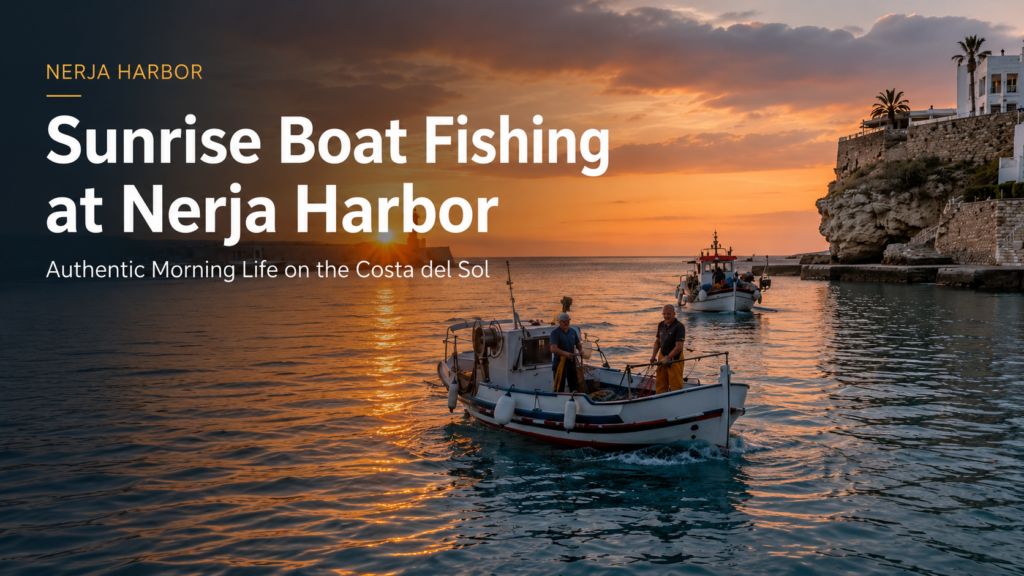
Let me start with something you won’t find in most travel guides, because most tourists are still asleep when the real action happens at the Nerja harbor.
I discovered this by accident. I was up early one morning unable to sleep, and instead of scrolling my phone in the hotel room, I wandered down to the water. That’s when I saw them – the fishing boats coming in with the sunrise, the catch glistening in the nets, and locals already gathering to pick the best fish for the market.
Here’s what makes this experience special:
- The boats arrive between 6:30-8:00 AM – depending on the season and how far out they went
- You can buy fish directly from the fishermen – cheaper than the market, fresher than any restaurant
- The light is incredible for photography – seriously, pack a camera
- You meet real locals, not just restaurant owners
- It takes maybe 30-45 minutes – perfect if you want to start your day differently
The harbor is just a short walk from the town center, near the eastern side of Balcón de Europa. Head toward Caleta Beach and follow the sound of boat engines. Stand back a bit to let the fishermen work – they’re professionals doing their job, not performers in a show.
I usually grab a café con leche from one of the small bars nearby and sit on the rocks watching. Sometimes the fishermen will chat if they’re not too busy. My Spanish isn’t perfect, but they appreciate the effort, and they’ll happily tell you about what they caught and where.
2. Evening paseo through Calle Alhambra and local wine bars
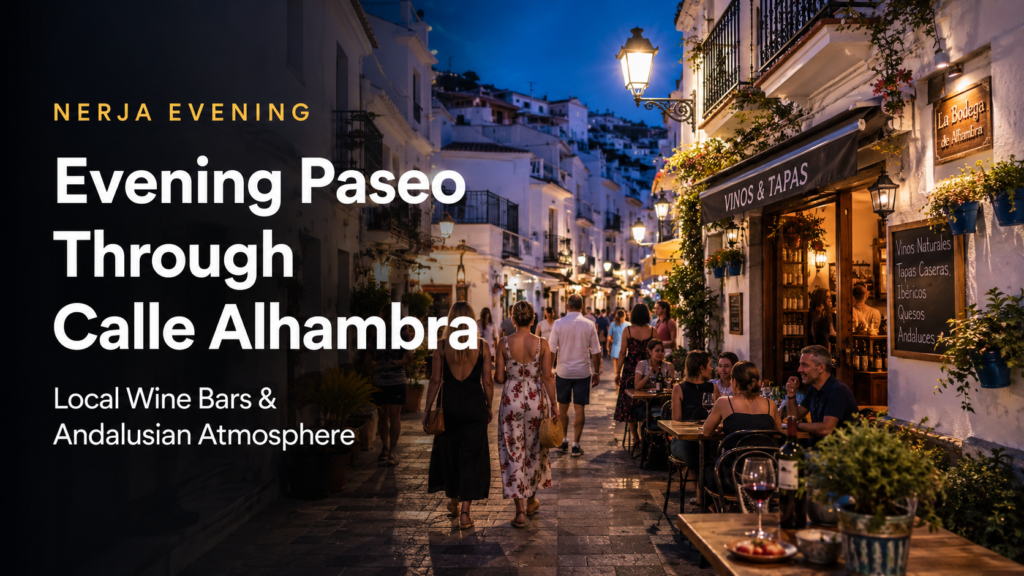
Everyone walks down Calle Alhambra in Nerja, but most tourists do it during the day when it’s crowded and kind of sweaty. The real Nerja happens here around 7-8 PM when locals come out for the paseo – that Spanish tradition of strolling through town and checking out who’s around.
This is a completely different vibe than the Balcón de Europa, and it’s where you actually feel like you’re living here for a moment instead of visiting.
Here’s my routine on this street:
- Start around 7 PM when it cools down a bit
- Walk the entire length of Calle Alhambra, which connects the old town to the plaza area
- Pop into small wine bars (vino bars) – these are hole-in-the-wall places, sometimes just a counter and four bar stools
- Order a glass of local wine and maybe some jamón or local cheese
- Chat with whoever’s next to you at the bar – this is how you meet other travelers and locals
- .. exist in the moment – no agenda, no checking off boxes
What I love about this is that it costs almost nothing. A glass of wine is €2-3, a small plate of cheese or jamón is €4-6. You’ll spend maybe €10-15 for an entire evening and you’ll remember it way more than any expensive restaurant.
The narrow streets around Calle Alhambra are where those iconic whitewashed buildings with colorful flower pots are. At sunset, when the light hits them just right, the whole area glows. Bring a camera, or just leave it in your pocket and actually look at what’s in front of you – sometimes that’s better.
3. Explore the Nerja caves – and actually plan it right

The Nerja Caves are famous for a reason. They were literally discovered by accident in 1959 when some young people were out looking for bats. What they found instead changed everything – a 5-million-year-old underground wonderland with stalactites that go on forever and some of the oldest paintings in Europe.
I’ve been through these caves about five times now, and here’s what I’ve learned:
The important stuff you need to know:
- Go when they open at 9:30 AM – seriously, this matters because by 11 AM it’s absolutely packed
- Book your tickets online in advance – don’t waste time at the ticket counter
- Bring a light jacket – the caves stay around 18°C (64°F) and it feels cold when you’re standing still
- Wear comfortable shoes – there’s a lot of walking on uneven surfaces
- Allow about 1.5 hours if you want to actually see things instead of just pushing through crowds
- The formations are real, not enhanced – no fake lighting or cheesy stuff, which I appreciate
The caves are located in Maro, which is basically Nerja but a bit higher up. You can reach them by car (about 10 minutes from the town center) or by local bus. The botanical garden next to the caves is worth spending 20 minutes in if you have time.
One thing that struck me the last time I went: the paintings inside are from the Upper Paleolithic period. That means humans were making art here 35,000+ years ago. You’re literally walking past something that old. That gets to me every time.
Pro tip: If the caves are booked solid, there’s a back way to see some of the exterior formations and the area from above. It’s not the official tour, but it’s not forbidden either. The views down the coast are stunning.
4. Spend real time at Balcón de Europa
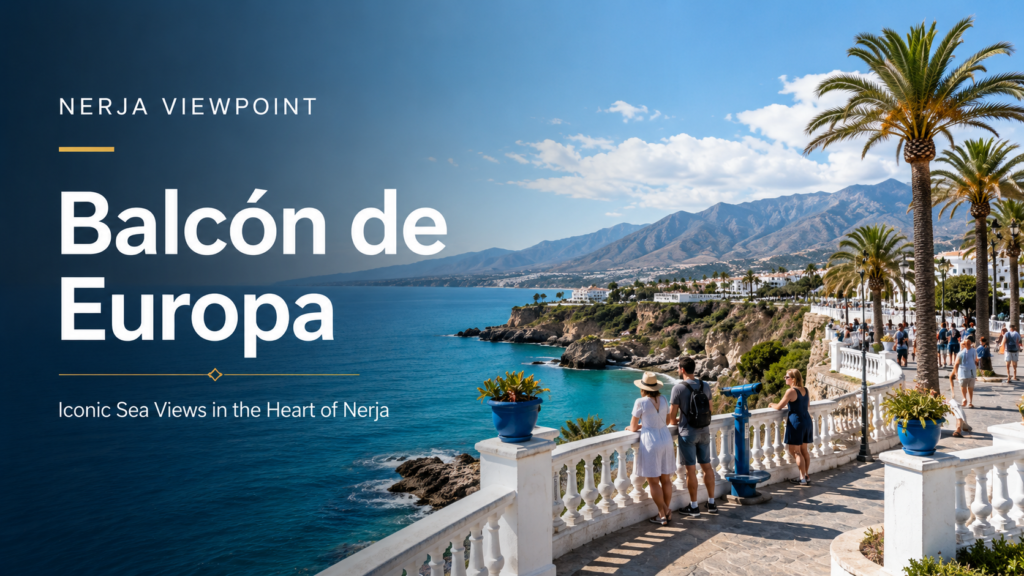
I know everyone goes here, which is why I almost didn’t include it. But here’s the thing – most people spend 20 minutes, take a selfie, and leave. You’re missing the actual point of the place.
The Balcón de Europa isn’t just a viewpoint. It’s a cliff that juts into the Mediterranean where a watchtower used to stand during the Moorish occupation. The water below is so clear you can see the seabed. The light hits the water in these impossible shades of turquoise and blue that don’t seem real.
Here’s how to actually experience it instead of just checking it off:
Morning visit:
- Arrive around 8 AM when it’s quiet
- Bring coffee from a local café
- Sit on the edge and just watch the light change on the water
- Notice the fishing boats heading out
Sunset visit:
- Get there at least an hour before sunset
- Stake out a good spot (early means good spot)
- Watch how the light changes as the sun drops
- Don’t spend the whole time looking at your phone getting the “perfect shot”
Evening visit:
- Come back around 8 PM when the day-trippers have left
- The town lights start coming on
- You’ll see locals actually using the space, not tourists
- The restaurants around here get busy but manageable
The restaurants around the Balcón aren’t all tourist traps. Some are genuinely good. The coffee is decent. The small shops sell actual local crafts, not just plastic trinkets, if you look around. I bought a leather bag at one of the stalls there three years ago and still use it.
There’s also the Church of El Salvador right there – it’s a white baroque-neoclassical building from 1697. You can pop in if it’s open. The thing that’s interesting is that it’s the only church in the world that has representations of all three archangels. Michael is the patron saint of the town, which is why you’ll see him everywhere.
5. Playa Burriana – actually decent if you know when to go
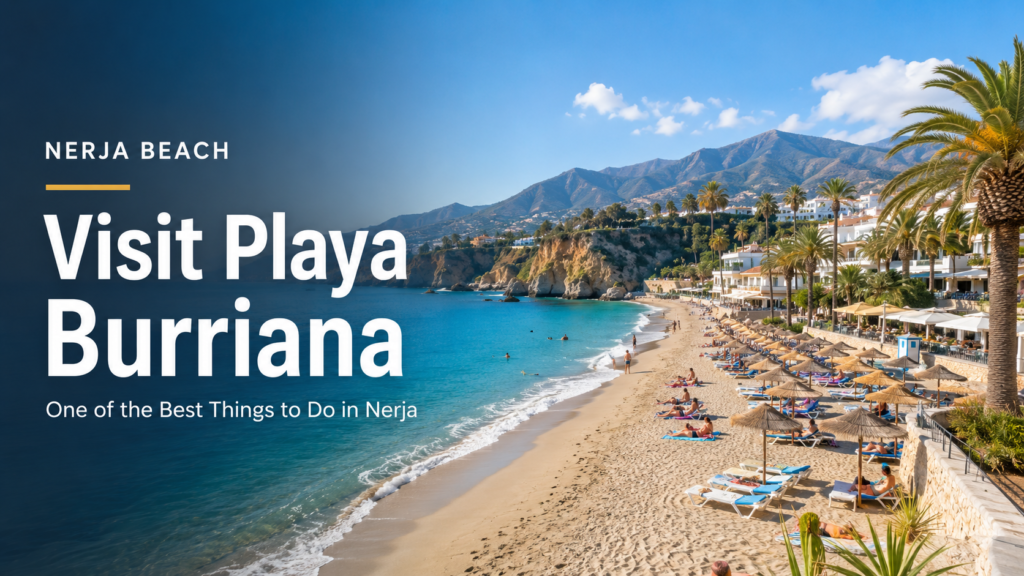
I see a lot of guides mention the small beaches right by the Balcón, and yeah, they’re fine for a quick swim. But if you want a real beach day, Playa Burriana is different.
It’s about a kilometer from the main town, which sounds far but it’s basically a 10-minute walk or 2 minutes by car. The beach itself is actually wide – unusual for this part of Spain – and the sand is golden and relatively clean. The water is clear enough to see fish.
The thing that makes Burriana special is the chiringuito restaurants along the beach. These are basic beach bars, and several of them serve food. There’s one that’s supposed to be famous for wood-fired paella, though honestly I’ve found the paella inconsistent. Go early (before 1:30 PM) if you want to eat without waiting an hour.
What to expect:
- Calm water – it’s not a rough beach
- Lots of families – which means it’s crowded but safe and reasonable
- Clean facilities – there are bathrooms and showers
- Rocky areas – wear water shoes because the stones get sharp
- Good sunset views – the beach faces west so you get the full golden hour
I usually go in the morning, swim, have a coffee and something light to eat at one of the bars, then head back to explore other parts of town. By afternoon it gets too crowded and hot for my taste.
6. Walk through Nerja’s old town and get actually lost

This might sound boring compared to caves and clifftop views, but I promise it’s not.
The old town is a maze of white buildings, narrow streets, blue doors, and flower-covered balconies. Most tourists do a loop through the main streets, see the Balcón, and leave. But if you actually wander – and I mean actually get lost – you’ll find something real.
There are bars where no tourists ever go. Little restaurants where the menu is written in Spanish only. Shops that sell ceramics and leather that locals actually buy. An old woman selling flowers from her doorstep. A cat sleeping in an alleyway. These are the things that stick with you.
How to do this:
- Leave your map at the hotel – or at least don’t look at it constantly
- Pick a direction and walk – the town is small enough that you won’t end up in another country
- Go down every street that looks interesting – these are the discoveries
- Stop for a drink or food when something appeals to you – not based on ratings, just because it looks good
- Talk to people – locals are friendly if you’re respectful
- Come back the same way you came – there’s a logic to these medieval streets even if it doesn’t seem like it
The older residential streets away from the main tourist areas are peaceful. You’ll see laundry hanging between buildings, people on their balconies, kids playing in little plazas. It’s a working town, not a museum.
One street that’s worth specific mention is the one with the painted tiles and murals. I don’t remember the exact name, but if you explore long enough, you’ll find it. These colorful ceramic panels are embedded in the building walls, and they’re beautiful. Perfect for photos if you’re into that.
7. Nerja caves aren’t enough – add the Maro waterfall experience

If you’re doing the Nerja Caves anyway, there’s a natural extension that most people miss: the Maro Waterfall and the surrounding area.
Maro is technically a different district, but it’s only about 3 kilometers away. There’s a small waterfall here that’s more impressive than you’d think coming from such a dry part of Spain. The hiking around here is excellent – real coastal cliffs, clear water, and way fewer people than the main beaches.
What to do:
- Hike to the waterfall – it’s about a 30-minute walk, moderate difficulty
- Bring water shoes – the stream has slippery rocks
- Go in the late afternoon when the light is good
- Don’t go in summer midday – it’s hot and exposed
- Combine with the caves visit – they’re close to each other
The views from the cliffs here are genuinely spectacular. This is where companies run the kayak tours you might have seen mentioned online. The water is incredibly clear, and you can see why people love this area so much.
8. The Tuesday market – more than just shopping

Every Tuesday, Calle Mirto turns into this incredible street market with over 170 stalls. This isn’t a tourist market – it’s where locals actually buy their weekly vegetables, clothes, and stuff for their houses.
Yes, there are things you can buy here. But the real value is the energy of it. The vendors shouting their prices, arguing with customers about the ripeness of a melon, the smell of fresh herbs and seafood. It’s chaos and it’s alive.
Go early – 9:30-11:00 AM is perfect. Any later and you’re fighting through crowds.
Things worth buying:
- Fresh produce – cheaper than restaurants and genuinely good
- Local ceramics – actual useful stuff, not souvenirs
- Small leather goods – bags, wallets, surprisingly well-made
- Jarope (local candy/preserves) – good for gifts
Things to do:
- Just walk around and absorb the atmosphere
- Practice your Spanish haggling skills
- Buy ingredients for a picnic
- Take photos of vendors and activity – most people are cool with it if you ask
- Grab something to eat at one of the food stalls
The market wraps up by early afternoon. By 1 PM, it’s mostly cleaned up. The timing is intentional – it’s designed around the Spanish schedule where lunch is the main meal.
9. Quad biking through the countryside

If you need to do something that gets your adrenaline up, renting a quad bike is a solid option. There are tour companies that handle the organized trips, or you can rent your own if you’re experienced.
The landscape outside Nerja is different from what you see at sea level. You go through cork forests, past small farms, through villages where tourists never normally go. The rides are usually designed to show you the “real Spain” – not the touristy bits.
Reality check:
- You’ll get dusty and dirty – pack extra clothes
- It’s genuinely fun if you like that sort of thing, not fun if you don’t
- It costs €50-100+ depending on what you book
- The tours are safe but you need to be comfortable with bikes
- Go in the morning before it gets too hot
I’ve done this once and it was fine – not something I’d necessarily repeat, but interesting. Some people love it and want to do it every day. Depends on what gets you excited.
10. Eat espetos at a beach chiringuito
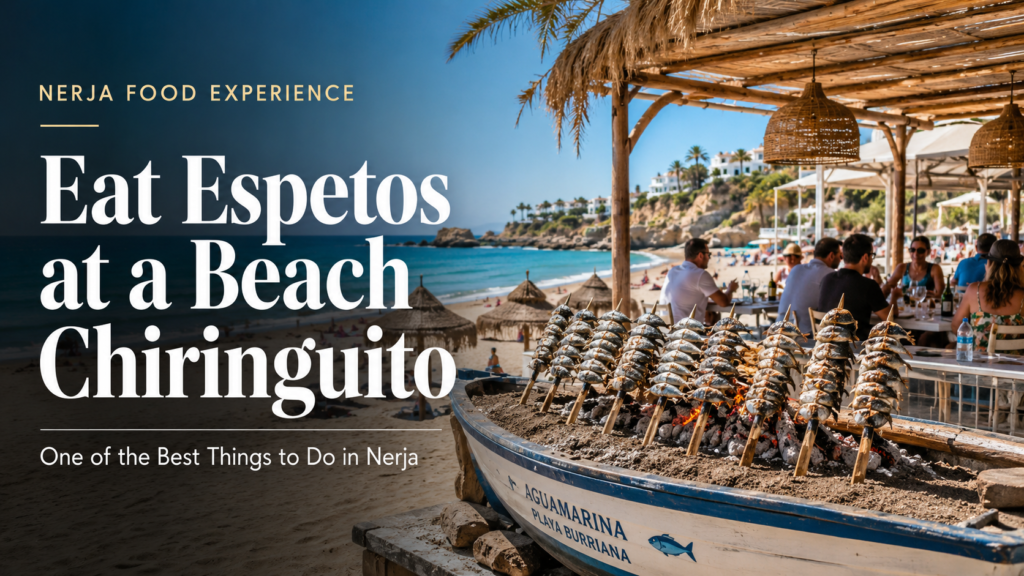
This isn’t really something you “do” so much as something you eat, but I’m including it because it’s worth specifically seeking out.
Espetos are sardines on a stick cooked over a small wood fire. You find them at beach bars called chiringuitos. They’re a Malaga coastal tradition, and Nerja takes this seriously.
The best ones are literally cooked in front of you on a tiny barbecue. You get a plate with the sardine, maybe some fried squid, maybe some bread. It costs about €8-12. It’s simple food done well.
Where to find them:
- Any chiringuito on Playa Burriana or the small beaches
- Playa el Salón has some options
- They’re sometimes available at the harbor bars
When to eat them:
- Lunch is best – you get them fresh
- Go early so they haven’t been sitting out
- They’re better with a cold beer or local white wine
I know this seems small, but it’s one of those things that defines a coastal holiday. The combination of sitting by the water, eating simple fresh fish, and watching the day go by – that’s the whole point of coming to a place like this.
Day trips from Nerja: worth your time
Frigiliana – a picture-perfect white village
Frigiliana is about 6 kilometers away – basically a 10-minute drive or a short bus ride. It’s famous for being one of the prettiest villages in Andalucia, and honestly, it lives up to the hype.
The entire old quarter is white buildings with narrow streets decorated with ceramic mosaics. There are flowers everywhere. The light hits it in this perfect way that makes every photo look like a postcard.
What to do:
- Walk the old quarter without any specific agenda
- Sit at a small café and watch locals go about their day
- Visit the Church
- Explore the small museums if you’re into history
- Eat at a local restaurant – don’t worry too much about finding the “best” one, they’re mostly good
Important: Go early in the morning (before 10 AM) or late afternoon. Midday brings tour groups and it gets crowded. The quality of your experience is directly related to how many other people are there.
I always recommend spending 2-3 hours here instead of rushing through. Grab lunch, have a long coffee, sit on a bench. Frigiliana works best when you’re slow about it.
Granada and the Alhambra – the big day trip
Granada is about 90 minutes from Nerja by car. The main attraction is the Alhambra, which is legitimately one of the most impressive palaces you’ll ever see. It’s a palace and fortress from the Islamic period, and the detail work is insane.
Real talk about the Alhambra:
- Book tickets online weeks in advance – it genuinely sells out
- Go early – 8:30 or 9:00 AM opening is best
- Plan 3-4 hours for the full experience
- Wear comfortable shoes – there’s a lot of walking
- It’s actually worth the hype – most famous tourist attractions aren’t, but this one is
The city of Granada itself is great too. The food scene is excellent, better than Nerja if I’m being honest. The neighborhoods away from the tourist areas are interesting. You could easily spend two days here.
But if you’re doing a day trip: Alhambra in the morning, lunch, wander the town in the afternoon, head back to Nerja.
Málaga – your real hometown option
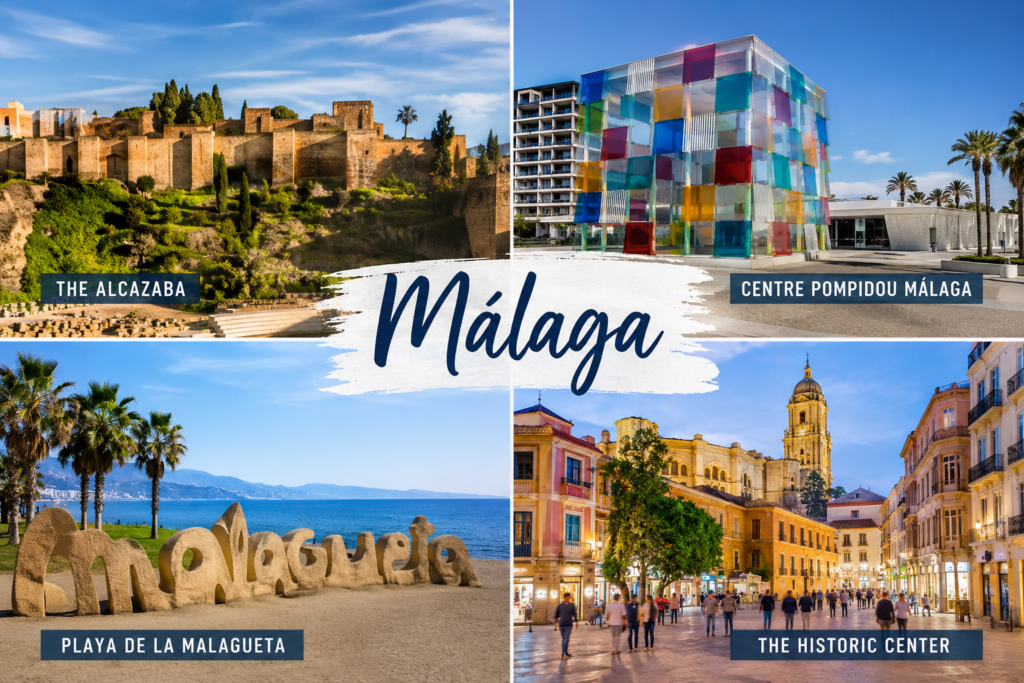
Málaga is just 45 minutes from Nerja, making it an easy side trip—and it’s absolutely worth a full day. The city has undergone impressive development in recent years while maintaining genuine character.
What to see:
- The Alcazaba – A medieval fortress that rivals the Alhambra but with far fewer crowds and equally stunning architecture
- Centre Pompidou Málaga – Contemporary art housed in a striking modern structure right at the port, creating an intriguing contrast with the city’s historic streets
- Playa de la Malagueta – An actual city beach where locals swim, not just tourists
- The historic center – Lined with excellent restaurants and tapas bars perfect for a proper crawl
- Muelle Uno – The revitalized port area, ideal for evening drinks and sunset views
Eating well in Málaga
Start your day at one of the best brunch spots in Málaga—it’s the perfect fuel for a day exploring on foot.
For dinner, seek out the best restaurants in the old town—these are where locals actually eat, far from the port’s tourist-focused establishments. If you’re after something special, Málaga’s fine dining scene is surprisingly excellent.
The real draw
Don’t come expecting another Nerja. Málaga is a proper working city with all the authenticity that entails—yes, including real city challenges. But that’s exactly what makes it compelling. It’s interesting because it’s genuine, not despite lacking picture-postcard charm.
Practical information for planning your Nerja visit
Getting there
By car from Málaga Airport:
This is honestly the easiest option. The drive is straightforward, about 65 kilometers, mostly on the A7 highway heading east. It takes about 50 minutes to an hour depending on traffic. Rent a car – it makes everything easier and lets you explore on your own timeline.
By bus:
There are buses from Málaga to Nerja, but schedules aren’t great for day-trippers. If you’re coming from the airport, you’d need to take the train or bus into Málaga first, then transfer. It works, but it’s slow. Only do this if you genuinely don’t want to drive.
By taxi:
Expensive – expect to pay €80+ from the airport. Only worth it if you have a group to split the cost.
Where to stay
If you want luxury:
Hotel Balcón de Europa is literally built into the cliff of the Balcón. The rooms are nice, the views are incredible, and you have direct beach access. Spend extra for a suite if you can – the views are worth it.
If you want character without spending too much:
Hostal Boutique Plaza Cantarero is family-run, in the old town, and doesn’t feel like a typical hotel. The owner actually gives a shit about your experience. Prices are reasonable, and you get that local feel.
If you want to save money:
There are budget options, but the ones I’ve seen are pretty basic. For Nerja, I’d rather spend a bit more and actually enjoy the accommodation.
When to visit
June or September – The sweet spot. Weather is perfect, it’s warm but not scorching, and it’s less crowded than July-August.
July-August – It’s hot, crowded, and pricey. I avoid this period completely.
October – Still decent weather, fewer crowds, good for exploring without melting.
November-March – Can be rainy, cooler, but if you don’t mind mild weather it’s fine. The town is actually livable at this point – real locals, no crowds.
Food and restaurants
Don’t eat near the Balcón de Europa – tourist pricing, average food. Walk five minutes away and quality improves dramatically.
Eat lunch (almuerzo) around 1-2 PM – This is the main meal in Spain. Restaurants have fixed lunch menus that are actually good value.
Try the pescaito – fresh fish fried simply. It’s what you should be eating by the water.
Don’t skip breakfast – Coffee and a tostada at a local café in the morning is €3-4 and perfect.
Wine from the region – It’s not fancy but it’s good and cheap. Try whatever the bartender recommends.
Official Nerja Tourist Information
Before you visit, it is also worth checking the official Nerja tourism website for updated visitor information, local events, beaches, walking routes and practical travel details. It can help you confirm opening times, seasonal activities and local recommendations directly from the destination itself. Use it as a practical planning resource alongside this guide, especially if you are visiting Nerja for the first time or planning activities around specific dates.
Final thoughts on Nerja
I keep coming back here because it hasn’t turned into something it’s not. There are tourists, yes. There are restaurants catering to visitors, yes. But underneath all that is an actual town where actual people live normal lives.
You can hit the major attractions – the caves, the Balcón, the beaches – in a day. But the real Nerja is found in the mornings at the harbor, in the early evening stroll through the old town, in a random conversation at a small bar with a local and another traveler. That’s where the memories come from.
Come here with an open mind and flexible plans. Wander down streets that look interesting. Talk to people. Eat what the restaurant recommends instead of what you planned. Sit somewhere with no agenda and just exist for a moment.
That’s what Nerja is really about, and honestly, that’s what travel should be about.
Have you been to Nerja? What was your favorite experience? Drop it in the comments – I’d love to hear what made your trip special.
Last edited on May 20, 2026

Frank Petersen is co-founder of CostaTable and lives just outside Málaga, where everyday life naturally revolves around food, cafés, and local restaurants. With a strong interest in finding places that actually deliver - not just look good - he spends much of his time exploring both well-known spots and those that are easier to miss.
His focus is simple. To cut through the noise and highlight places that are worth visiting, whether it’s a relaxed brunch, a good coffee, or a dinner that feels right from start to finish.
Through CostaTable, Frank aims to give readers a more honest and useful guide to the food scene in Málaga, helping them spend less time searching and more time enjoying.