Malaga Hidden Gems: Where You Actually Want to Go
I moved to Malaga thinking I’d stay a week. Two months later I was still there, broke, and completely obsessed with finding every corner of the city that tourists never see.
That’s the thing about Malaga – it doesn’t hit you immediately. You don’t walk off the plane and think “genuinely, this is incredible.” You get here, walk around, go to the famous spots, and think “okay, it’s nice I guess.” But then something happens. You find a small bar packed with locals on a Friday night. You eat seafood at a fishing village that costs €12. You stumble into a neighborhood covered in murals that nobody posted on Instagram. And suddenly you realize you’ve been looking at Malaga completely wrong.
Everyone knows the big stuff – the beaches, the museums, the nightlife. But that’s not real Malaga. Real Malaga is the stuff that doesn’t make it into guidebooks. It’s the restaurants where you’re the only tourist. It’s the parks where locals actually hang out. It’s the neighborhoods where people live instead of pose.
So after two months of basically living here like a local (or at least trying to), I’m sharing what I actually found. Not the stuff that’s in every travel blog. Not the things that are famous. Just the real places that made me fall in love with this city. The places that made me understand why people choose to live here instead of somewhere flashier.
This isn’t going to be polished travel writing. It’s going to be real. Because Malaga deserves that. It deserves honesty instead of the same recycled “top 10 things” everyone else writes about.
FUN FACTS: MALAGA’S HIDDEN GEM CULTURE
🎨 Street Art Capital: Malaga has become one of Spain’s leading street art cities with over 2,000 murals covering neighborhoods from Lagunillas to Puertas Oscuras.
🏛️ Baroque Hidden Gems: Malaga contains more Baroque churches than any other city in Andalusia, many tucked away from main tourist routes.
🌳 Plant Paradise: La Concepcion Botanical Garden contains over 3,000 plant species from 6 continents – one of Europe’s most biodiverse gardens.
⛱️ Secret Beaches: Malaga has 16+ hidden beaches that most guidebooks never mention, from El Peñón del Cuervo to Malagueta.
🎭 Flamenco Legacy: Juan Breva, one of flamenco’s greatest singers, was born in Malaga. His influence lives in hidden flamenco bars throughout the city.
🍤 Fresh Seafood Capital: The fishing villages of Pedregalejo and El Palo catch fish daily – restaurants serve it the same day you eat it.
HIDDEN GEM ACTIVITIES IN MALAGA
- Rent a bike and ride the coastal path to El Palo (1-2 hours)
- Take a sunset walk on any beach without crowds
- Sit in Gibulkarte Park and watch the city
- Bar crawl through Lagunillas hitting 4-5 local bars
- Explore street art routes in Puertas Oscuras
- Take a boat to Benalmadena from the port
- Eat at a market – Atarazanas – at lunch time
- Join a local cooking class (€40-60)
- Attend Semana Santa processions if visiting March/April
- Work from a cafe like a local (not as a tourist)
The places worth your time
La Concepcion Botanical Garden – Seriously, Go Here
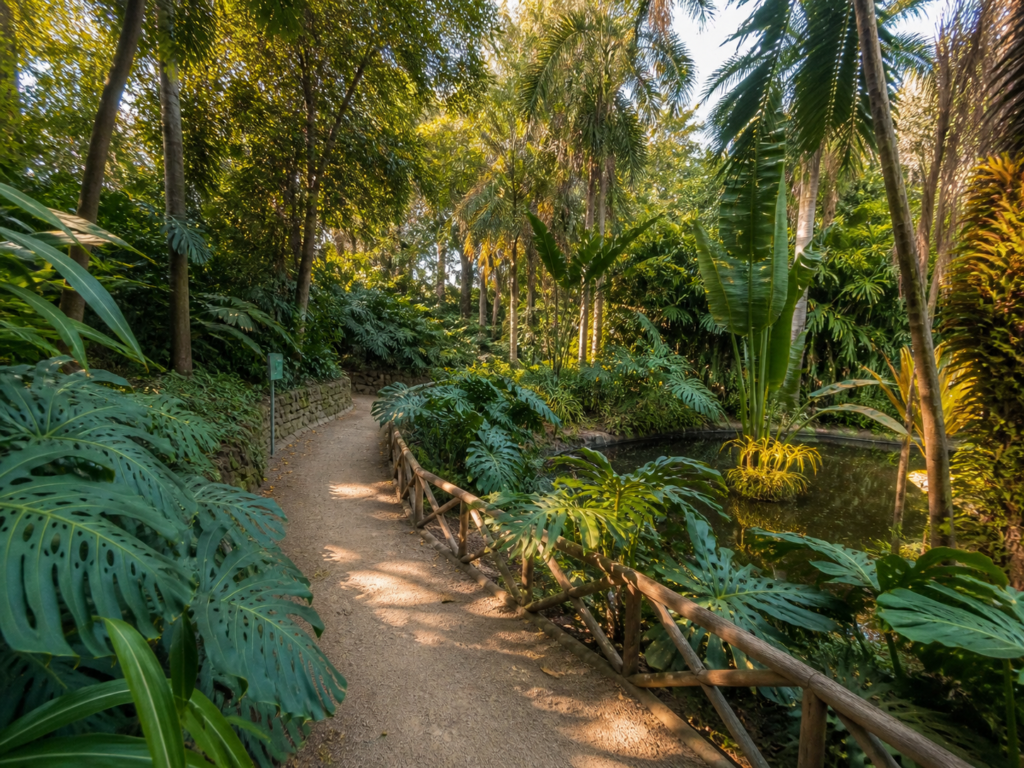
Most tourists skip botanical gardens. I get it. Sounds boring. But La Concepcion isn’t like other gardens. When you walk in, it genuinely feels like you’ve stepped into another world. You’ve got these massive palms everywhere, bamboo groves that are actually dense enough to make you feel lost, cacti from all over the place, and these lily ponds that look almost unreal.
The thing that gets me is how quiet it is. You’ll have entire sections to yourself. I went on a Saturday afternoon and ran into maybe 15 other people the entire time. That never happens at tourist attractions.
It was created back in the 1800s by some wealthy couple who were obsessed with plants – the Marquis and Marchioness of Loring. They literally traveled around the world collecting plants and just dumped them here. Now it’s this crazy mix of tropical stuff, Mediterranean plants, and random specimens from Africa, Asia, South America – basically everywhere. Over 3,000 plant species according to the signs. You’ve got plants here that probably don’t exist anywhere else in Europe.
You can spend literally 3-4 hours here just wandering around. They’ve got guided tours if you want to actually learn something instead of just guessing. The walking paths are well-maintained and take you through different themed sections. There’s a cafe where you can sit with a coffee and just chill for a while. The views of the city from the higher sections are actually pretty stunning – on clear days you can see all the way to the coast.
Best tip? Go on a Sunday morning. Entrance is completely free on Sundays – normally €6.50. I’m not kidding. Completely free. Get there early though, around 10 AM, before the crowds start rolling in. By 11 AM it gets noticeably busier.
If you’re into photography, late afternoon light through the trees is gorgeous. The water features reflect everything and it creates these amazing photo opportunities. Bring a decent camera if you have one.
Santuario de la Victoria – This Church is actually incredible
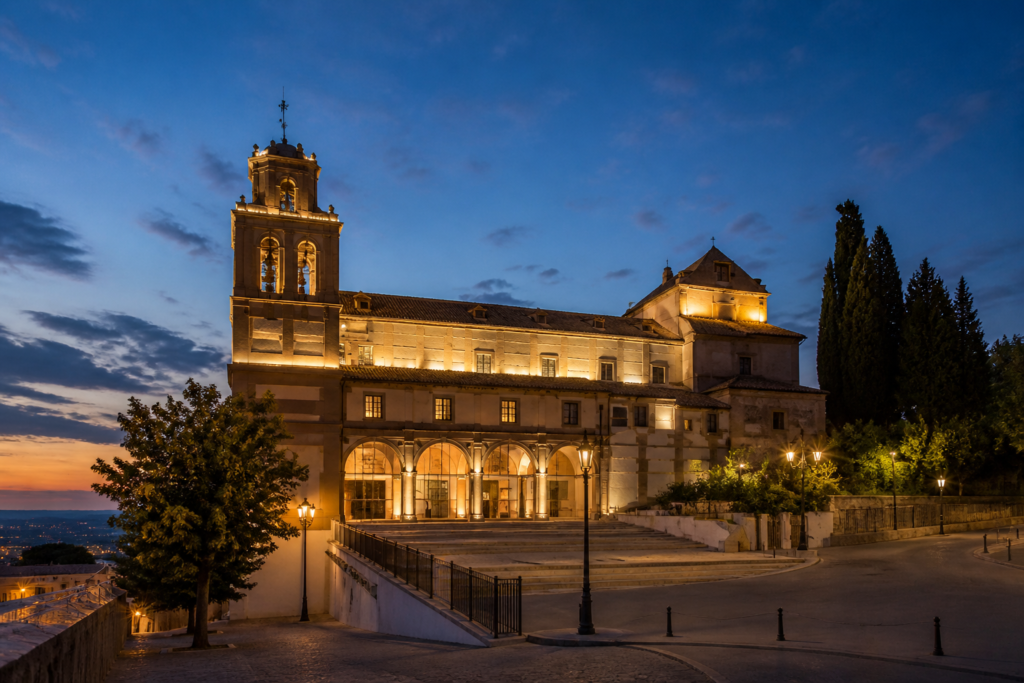
This is a 17th-century church in the Conde de Urena neighborhood. I know, churches aren’t exciting. But walk inside and your jaw actually drops. The whole interior is this explosion of gold, carvings, and artwork that took people like 200 years to finish. We’re talking serious detail work here.
Here’s what makes it worth your time – there’s this spiral staircase that takes you up to the second floor where the actual altar is. And when you get up there? It’s insane. Gold leaf covering basically every flat surface. Frescoes on the ceiling and walls. Carved details so intricate you literally can’t process what you’re looking at all at once. There’s this massive statue of the Virgen de la Victoria in the center, who’s basically the patron saint of Malaga and a really big deal for locals.
The architecture is pure Baroque – all curves, all drama, everything designed to make you feel small and overwhelmed. It works. Even if you’re not religious, you can appreciate the craftsmanship and the sheer amount of effort that went into this building.
If you time it right and get there during Semana Santa (Holy Week in March/April), you’ll see processions that are legitimately some of the most impressive religious ceremonies in Spain. We’re talking thousands of people, incredible hand-made floats that take months to build, music, the whole thing. It’s a religious event but also just a spectacle. The main processions pass through here and they’re actually worth seeing if you can time your visit right.
But even if you’re there on a random Tuesday, it’s worth popping in. The interior lighting is best in the afternoon when sunlight comes through the side windows and hits the gold and frescoes. Just try to go when it’s not packed with tour groups (mornings are better than afternoons).
They’re only open 9 AM to 1 PM and then 5 PM to 7 PM, so plan accordingly. It’s free to enter, though donations are obviously welcome if you appreciate what you’re seeing.
The neighborhood around it – Conde de Urena – is also pretty interesting for wandering. Small streets, local shops, a real neighborhood feel without being touristy.
Alcazaba Fortress – More than just a view
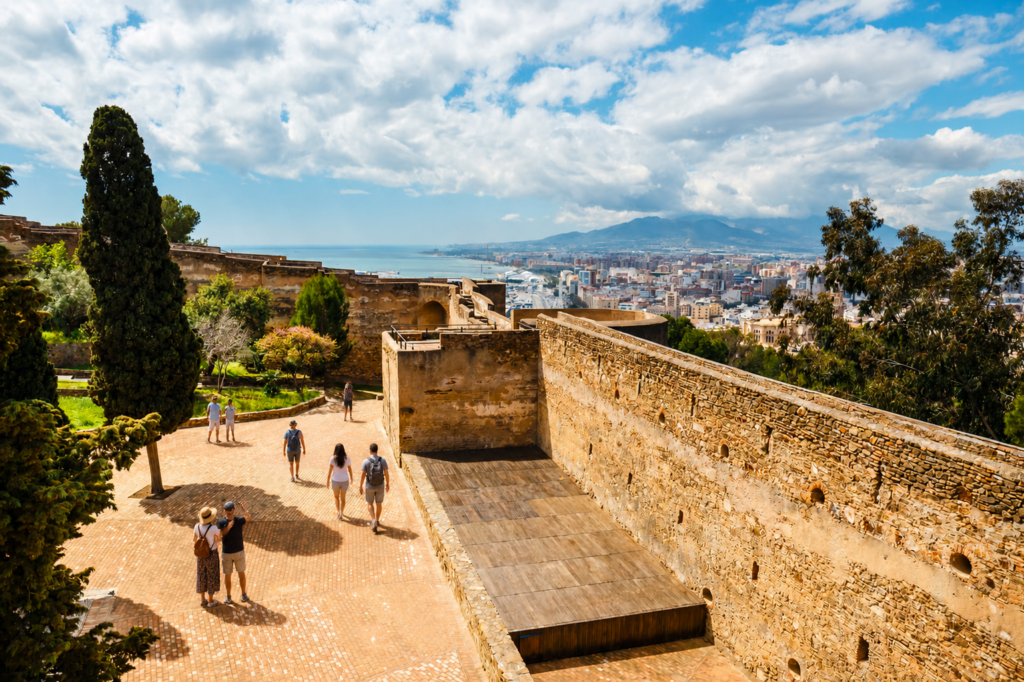
Everyone knows about the Alcazaba. It’s in every guidebook. But most people just walk around the outside, take a photo, and leave. If you actually go inside and spend time exploring, it’s way better than you’d expect. There’s actual palaces with intricate details, gardens with fountains, a whole Roman sculpture museum that nobody talks about. It’s a Moorish fortress that literally overlooks the entire city from a hilltop position.
The thing about this place is that it doesn’t feel like a typical tourist trap, even though technically it is one. The crowds are manageable compared to other major attractions. You can actually walk around and enjoy it without fighting through masses of people taking selfies.
The light there in the late afternoon is insane for photos. Everything gets this golden tone around 5-6 PM that makes the whole place look like a painting. The fortifications cast these dramatic shadows. The stone changes color. It’s genuinely beautiful from a photographic perspective.
If you’re interested in history, there’s plaques and signage explaining the Moorish history, the periods of construction, what different sections were used for. The palace sections are surprisingly ornate for a fortress – lots of intricate tilework and carved details.
The views from the top are actually worth the hike up. You get perspective on where everything is in Malaga. You see the city layout, the beaches, the surrounding areas. It helps you understand the geography of where you’ve been and where you want to go next.
Entrance is around €4.50. Check their website for exact hours – they change seasonally. Early morning or late afternoon visits are best for avoiding crowds and getting good light.
The Neighborhoods where actual people live
Lagunillas – The Street Art Hub
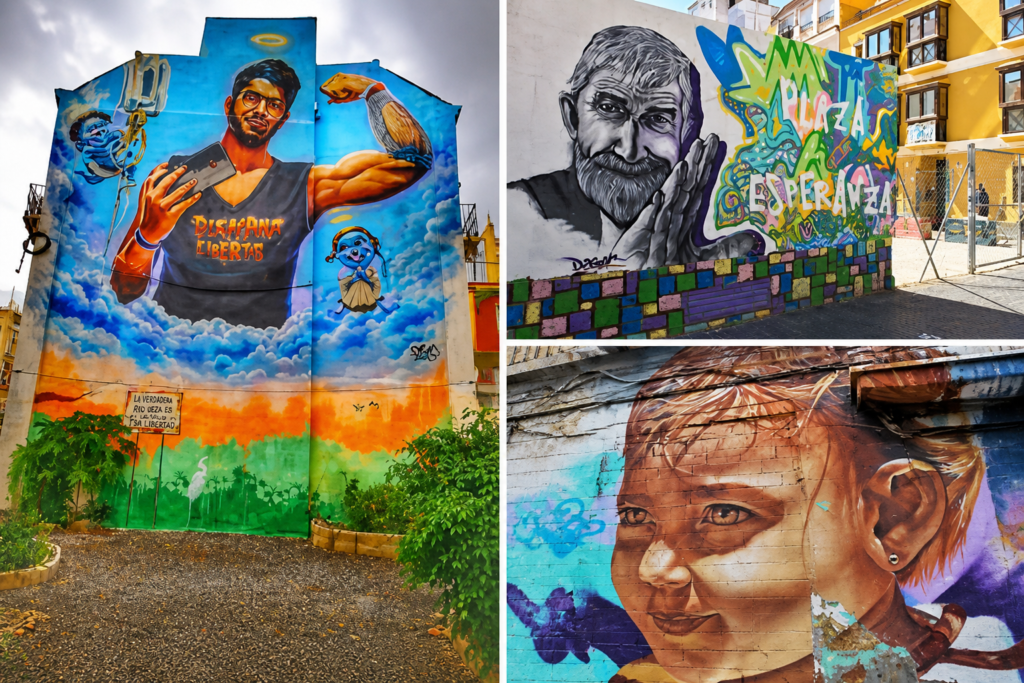
Discover Street Art | Malaga Tourism
This neighborhood started getting known for street art around the early 2000s when local artists basically said “let’s just paint everything.” Now the walls are constantly changing. Like, seriously constantly. Artists from all over the world come here to leave their mark. Every time I walked through, there was something different than the day before.
What’s cool is it’s not just murals for tourists to photograph. The whole vibe is alternative. You’ve got indie shops, weird cafes that local artists and musicians hang out in, people who actually live here instead of tourists walking around with cameras looking for Instagram shots. It feels real because it is real.
The street art here is actually good. Not just random tags. These are pieces that took thought, skill, and time. Artists here are trying to make statements, create something beautiful, or just practice their craft. You can tell the difference between someone who cares and someone just throwing paint around.
If you get hungry while you’re there, La Oliva Negra is this little shop that makes traditional Spanish food to take out. Nothing fancy, nothing trying to be trendy. Just good homemade stuff. Croquetas, patatas, seafood, local specialties. It’s cheap. It’s good. It’s what people in the neighborhood actually eat.
Or hit up El Ombu for Argentinian empanadas that are legitimately perfect. These aren’t Spanish empanadas. They’re the Argentine version with different seasonings, different fillings, different dough. If you’ve had Spanish empanadas and thought “meh,” try these. They’re completely different.
Then there’s SAN Sabor if you want actual southern Italian food that’s not trying too hard to be fancy. Real pasta, real sauces, people who know what they’re doing. The kind of place where the cook cares more about the food being good than about having a trendy menu.
The best time to go is late afternoon around 4-5 PM when the light is good and people are around. Early morning and midday it’s weirdly quiet. The neighborhood doesn’t really wake up until afternoon. But around sunset and into early evening, it gets lively. People are out. The light is perfect. It’s actually nice.
Bring a camera. Seriously. The murals are photogenic and the lighting makes them look amazing.
Puertas Oscuras – The real Street Art experience
So if Lagunillas is the general street art area, Puertas Oscuras is where the serious artists work. It’s this specific walking route through neighborhoods where you get these massive, thought-out murals instead of just random tags. Actual art. Pieces that took weeks to complete. Stories painted on walls.
The murals here have themes. You can see progression. Some of them are about social issues, some are just beautiful abstract work, some are portraits or character pieces. They’re not there just to be pretty – they’re there because artists had something to say.
You can walk it yourself without a guide. Just follow the murals. It’s free. The light is best either early morning or late afternoon – the sun hits the walls in a way that makes the colors pop and gives depth to the work.
The route takes you through different neighborhoods, so you get a feel for different parts of the city as you go. You see where people actually live. You see local shops, local bars, the reality of Malaga outside the tourist areas.
Bring a camera. Seriously. The photos you’ll get here are actually good. This isn’t Instagram-filtered stuff – it’s genuinely interesting street art.
Wear comfortable shoes. You’ll be walking for a couple hours at least, probably more if you stop and appreciate things.
El Limonar – Where locals actually live
Local Accommodation | El Limonar Beach
This neighborhood is east of the city center and it’s basically where people who live in Malaga actually live. Tree-lined streets, local restaurants, beaches with actual locals instead of tourists. It’s quiet. It’s residential. It’s what the real city looks like when tourists aren’t around.
If you stay here instead of in the tourist center, you’ll eat better, pay less, and actually understand what Malaga is like as a place where people live instead of just a tourist destination. The beaches here aren’t packed. The restaurants don’t charge tourist prices. The bars have actual locals sitting around having conversations, not tourists trying to have an “authentic experience.”
The neighborhood has parks, local shops, small supermarkets, all the things a real neighborhood needs. You can buy groceries, get coffee, eat dinner, live a normal life here. That’s the point – it’s normal. That’s what makes it special to visitors.
If you rent an apartment here for a few days instead of staying in a hotel, you’ll get a completely different perspective on the city.
Beaches that aren’t packed with people
El Peñón del Cuervo – Legitimately beautiful
This is a small beach, only about 100 meters long, but it’s surrounded by rocky cliffs and vegetation that actually looks natural. No development. No resort hotels looming over everything. No tourists running around with inflatable stuff. Just a quiet beach with character.
The best time is late afternoon when the light starts changing. And honestly, go for sunset. The sunsets here are actually worth the trip from the city center just for that alone. The sky lights up orange and pink and it reflects on the rocks and the water. It’s genuinely beautiful without being touristy.
You can get there by bus, rent a car, or if you’re adventurous, rent a bike and take the partially paved, partially road route along the coast. It’s actually a nice bike ride if you don’t mind some of it being on regular roads. Sun loungers and umbrellas available if you need them – it’s about €10-15 a day for a lounger and umbrella.
The water is clean. The sand is decent. You might actually have a section of beach to yourself, which never happens anywhere in Malaga in summer. Even in peak season this place is quiet.
If you go in spring or fall, you can actually swim without worrying about jellyfish or getting knocked over by waves. Summer water is warm but crowded. Winter water is cold but peaceful.
Pedregalejo and El Palo – Real fishing villages
El Palo Fishing Village | Beach Bars Directory
These are traditional fishing neighborhoods that somehow didn’t get completely destroyed by tourism. You can still see fishermen’s houses – actual old buildings where fishing families have lived for generations. You can still smell fish being caught and sold. The restaurants are actual seafood places, not tourist traps trying to be “authentic.”
The beaches have black sand – which is actually kind of cool looking and weird to walk on at first. The sand feels different. It gets hotter in the sun. But it’s genuinely interesting if you’ve only seen regular beach sand. Good for swimming. Good for just sitting and watching the water.
The real reason to come here is the evening. Around 6-7 PM when locals are getting off work and the sun is starting to set, these neighborhoods come alive. The bars are packed with actual people – families, workers, groups of friends. The restaurants have people eating dinner at normal dinner times, not tourists eating at 5 PM.
The seafood is incredible because it’s literally caught that morning by people who live here. Fresh doesn’t even begin to describe it. And the prices? You’re looking at €10-15 for really good fresh seafood including drinks. That’s absurdly cheap for what you’re getting.
This is where locals come to eat, not tourists. That’s how you know it’s good. If a restaurant is packed with locals and tourists are scarce, that restaurant knows what it’s doing.
The evening atmosphere is genuinely nice. People are relaxed. The sun is setting. The food is good. The prices are reasonable. The whole thing just works.
Malagueta Beach – The local alternative
While the main city beach gets completely destroyed with crowds in summer, Malagueta Beach is where locals actually go. The water is cleaner because it’s not as packed with people. There’s more space so you don’t feel squished. You don’t feel like you’re in a human sardine can.
Beach bars serve fresh fish and drinks at reasonable prices. Good for half-day visits. Perfect for watching sunset without fighting through thousands of people. You can actually find a spot to sit down without a reservation or arriving at 4 AM.
The neighborhood around it is local and real – shops, bars, restaurants, the things a normal neighborhood has. It doesn’t exist just for tourists.
Places to actually eat
Bar Molinillo 33 – Hidden gem for real
This is a small local bar where tourists basically never go, even though it’s in the historic center. The empanadas are some of the best in Malaga – and I’m not exaggerating. They’re Argentine-style, so they’re different from what you expect from Spanish empanadas. The dough is different. The fillings are different. The whole thing is different.
The tacos are actually good. Not “tourist good” – actually good. Made by someone who knows what they’re doing. The prices are a fraction of what you’ll pay at touristy places on main streets. We’re talking €2-3 for quality food.
It’s tiny. Like, actually small. Maybe 8-10 tables max. Friday and Saturday nights it gets packed with locals. Like, standing room only packed. Show up early or you’re waiting 30 minutes for a table.
The wine selection is solid. They actually care about what they’re serving. The vibe is actual neighborhood bar, not “we’re trying to be cool for tourists.” People are there to eat and drink and hang out with friends, not to take photos.
The owner knows people. It’s the kind of place where regulars come every weekend and know the staff and talk about their lives. You’re an outsider but you don’t feel unwelcome.
Desal Cafe – Cheap breakfast that actually tastes good
Two locations, both kind of hidden from main streets. You can get a full breakfast plus a drink for like €5. Not as a deal or a special – that’s literally just what they charge. In the center of Malaga. Where everything costs money.
Location one is in this quiet passageway with outside seating. Combo plates are huge. Like, actually huge. You can get a full meal that would cost €12-15 at a normal cafe for €5. Location two is on a side street not many people notice, has tables outside facing a church, and their eggs are ridiculous. Perfect eggs. Cooked right. Seasoned properly.
Go early when they open around 7-8 AM. For a comprehensive guide to brunch spots throughout the city, see our best brunch in Malaga article. It gets busy by 10 AM and waits develop. But early morning you’ll get a table immediately.
The coffee is actually decent. Not amazing but decent. The food is what matters. Looking for more cafe recommendations? Explore our complete guide to the best cafes in Malaga for more hidden gems.
The restaurants everyone should try
El Pimpi – https://costatable.com/restaurants/el-pimpi-malaga/
This is a legendary spot that feels like you’re inside a real Spanish tavern from like 100 years ago. Wood everywhere. Random decorations on the walls. Flamenco posters. Historical photos. Traditional Malaga food that’s actually good. Not fancy. Not trying to be Instagram-worthy. Just good food made the way it’s been made for decades.
La Cosmopolita – https://costatable.com/restaurants/la-cosmopolita-malaga/
One of the oldest restaurants in the city – been there since forever. Traditional tapas. Regional specialties. It’s not trying to be fancy. It’s just good food that’s been made the same way for like forever. The kind of place where your grandparents probably ate and their parents ate before them.
Casa Aranda – https://costatable.com/restaurants/casa-aranda-malaga/
Famous for churros and hot chocolate. It sounds simple, but they do it right. Crispy churros with the right texture. Actual chocolate that tastes like chocolate, not whatever watered-down stuff most places serve. If you’ve never had proper hot chocolate with proper churros, this is the place.
Pistacho Azafrán – https://costatable.com/restaurants/pistacho-azafran-malaga/
This one blends traditional Andalusian stuff with contemporary cooking. It’s not trying too hard but it’s clearly made with care. Someone in the kitchen actually cares about flavor and presentation without being pretentious about it.
Trágata – https://costatable.com/restaurants/tragata-malaga/
One of the best restaurants in Malaga, period. Mediterranean food that’s actually creative without being pretentious. The kind of place where everything on the menu is good and you don’t have to guess what you’re getting into.
UvéDoble – https://costatable.com/restaurants/uvedoble-malaga/
If you like wine, come here. The wine list is insane. They have wines you’ve never heard of. The tapas are actually made to pair with wine, not just thrown together. It’s intimate. It’s quiet. It’s the kind of place where you can actually talk to the person you’re with.
Recyclo Bike Cafe – https://costatable.com/restaurants/recyclo-bike-cafe-malaga/
Eco-conscious coffee place. Good quality, sustainable, actual care put into the coffee. Not trying to be trendy – it just is because they actually care about what they’re doing. The kind of place that’s not trying to be trendy, it just is.
Kima Coffee – https://costatable.com/restaurants/kima-coffee-malaga/
Specialty coffee done right. Not fancy, just actually good. Local atmosphere. People hanging out, working on laptops, talking with friends. The baristas know what they’re doing.
Next Level Specialty Coffee – https://costatable.com/restaurants/next-level-specialty-coffee-malaga/
Takes coffee seriously. If you want to dive deeper into coffee culture, check out our guide to the best coffee in Malaga.
Precision brewing. Knowledgeable people. If you actually care about coffee, come here. They’ll make you something specific based on what you like instead of just making the same drink for everyone.
Byoko – https://costatable.com/restaurants/byoko-malaga/
Asian-inspired food in a contemporary setting. Different from all the Spanish stuff. Legitimately good. The kind of place where they’re not trying to be fancy but the food is clearly made with skill.
Want more dinner options? Check out our guides to the best dinner in Malaga and hidden dinner spots for additional recommendations beyond what we’ve covered here.
Atarazanas Market – Where locals actually shop
This isn’t a tourist attraction disguised as a local market. This is where people actually buy food. You can grab fresh seafood from fishmongers, try fried fish from the market cafes, eat tapas while watching vendors work. The prices are insanely low because there’s no tourist markup.
Go in the morning if you want to see the actual market action – vendors setting up, dealing with regular customers, the real market happening. Go in the afternoon if you just want to eat cheap good food without navigating through heavy crowds.
The building itself has Moorish architecture influence, which is another reason to check it out. The exterior and interior have character and history.
Other places worth your time
Gibulkarte Park
Peaceful park with elevated views of the city. Locals use it for morning walks and exercise. Not crowded even on weekends. Good for photos of the city from different angles. Good for just sitting and thinking and getting away from the city noise.
Teatro Cervantes
Beautiful old theater building. Even if you don’t see a show, walk inside and look at the architecture. It’s actually impressive. Sometimes they have guided tours if you want to learn the history. The light coming through the windows at evening is actually perfect for photography. You can see why it was such an important cultural building.
Local Artisan Workshops
These exist throughout neighborhoods but nobody talks about them. Small places where people make ceramics, leather goods, traditional sweets, artwork. You actually talk to the artisans. You can watch them work. You buy something that’s actually made by someone, not mass-produced in a factory.
Ask locals where these are. Ask in small shops. Ask in cafes. Word of mouth is how you find them. They’re not advertised because they don’t need to be – they operate for locals, not tourists.
BUDGET-FRIENDLY MALAGA HIDDEN GEMS
- **Botanical Garden:** Free on Sundays (€6.50 other days)
- **Churches:** Free entrance
- **Markets:** Free to walk, cheap to eat
- **Parks:** Free
- **Street Art routes:** Free
- **Beaches:** Free
- **Full meal:** €8-15
- **Cafe coffee:** €1.50-2
- **Beer:** €1.50-2.50
- **Bus ride:** €1.40
- **Total daily budget:** €45-70 including accommodation
HIDDEN GEM HOTELS & ACCOMMODATIONS IN MALAGA
Find Accommodations | Budget Hotels
- **Tourist Center:** €70-120/night (avoid – touristy)
- **Lagunillas:** €45-75/night (young vibe, street art)
- **El Limonar:** €40-70/night (local, peaceful, best choice)
- **Pedregalejo:** €50-80/night (beach village vibe)
- **Monthly rentals:** €400-700/month (best value for longer stays)
The best neighborhoods to stay in are Lagunillas or El Limonar. Both have everything you need and both feel like actual neighborhoods instead of tourist zones.
How to actually get around
Public transport is cheap:
- [Malaga Transport Info](https://www.emtmalaga.es)
- Bus: €1.40 per trip, €5.40 for five trips (best value)
- Tram: €1.40, connects city center to beach areas
- Trains: €1.50-2 to reach surrounding villages and El Palo/Pedregalejo
Rentals:
- Bikes: €10-15/day (perfect for beach areas and neighborhoods)
- Cars: €30-50/day (good if you want to explore more areas)
- Scooters: €20-40/day (good for neighborhoods and getting around quickly)
Walking:
- Lagunillas is walkable from the center (15 minutes)
- Santuario is about 20 minutes on foot from main areas
- Mercado is 30 minutes walk, or 5 minutes by bus
- Neighborhoods are very walkable if you have time
Download Citymapper | Download Moovit
Download Citymapper or Moovit for real-time public transport info. Way better than Google Maps for Malaga. Google Maps will sometimes send you on weird routes. These apps know the actual schedules and routes.
The buses are frequent during the day. Evening and night frequency drops but stuff still runs. Walking around the city center at night is fine – it’s safe and lit.
BEST TIME TO VISIT MALAGA
Spring (April-May): Perfect weather. Not too hot. Flowers everywhere. Not crowded yet. Prices are still reasonable. This is legitimately a great time to visit.
Summer (June-September): Hot as hell – like 30+ degrees. Beaches get packed. Prices go up. Restaurants get crowded with tourists. Nightlife is insane though if that’s your thing. But the city feels overrun.
Fall (October-November): Weather is perfect – warm but not hot. Crowds are gone. Prices drop. The city feels normal again. This is actually the best time to go if you get to choose.
Winter (December-March): Quiet. Peaceful. Some attractions have limited hours. Prices drop significantly. If you want the real city without tourists, this is it.
Pro tip: Go September or October. You get summer weather without summer crowds. The city still feels like a place where people live, not a tourist theme park.
HOW TO GET AROUND MALAGA: TRANSPORTATION GUIDE
The public transport system is actually really good. Buses go everywhere. The tram connects the city center to the beaches. Trains connect to surrounding towns.
Walking is genuinely viable for most neighborhoods. The city center is compact enough to walk in 30 minutes. Different neighborhoods take 15-30 minutes to walk to from the center.
Renting a bike is a great option if you want to explore the coast or get to neighborhoods quickly. The bike path from the center to El Palo is actually nice.
Taxis are available everywhere but public transport is cheaper and honestly just as fast.
How to actually combine this into a trip
You don’t need a detailed itinerary. Just combine stuff geographically:
- Hit Lagunillas and Santuario together (they’re close, walkable between each other)
- Spend a full day at beaches – El Palo, Pedregalejo, El Peñón del Cuervo all accessible to each other
- Do a botanical garden morning in the north, market afternoon
- Build a restaurant crawl hitting local spots in different neighborhoods
- Wander neighborhoods on foot, eat dinner where it looks good and is packed with locals
- Spend an afternoon at Alcazaba, sunset at a beach
You don’t need to be efficient about this. Malaga is small enough that you can just wander and find things. That’s actually the best way to experience it.
Related reading & resources
Malaga Turismo – Official tourism site with updated information
Malaga Guide – TripAdvisor guides and reviews
Hidden Malaga Blog – Timeout magazine Malaga coverage
Spanish Food Guide – Official Spain tourism with regional guides
The actual point
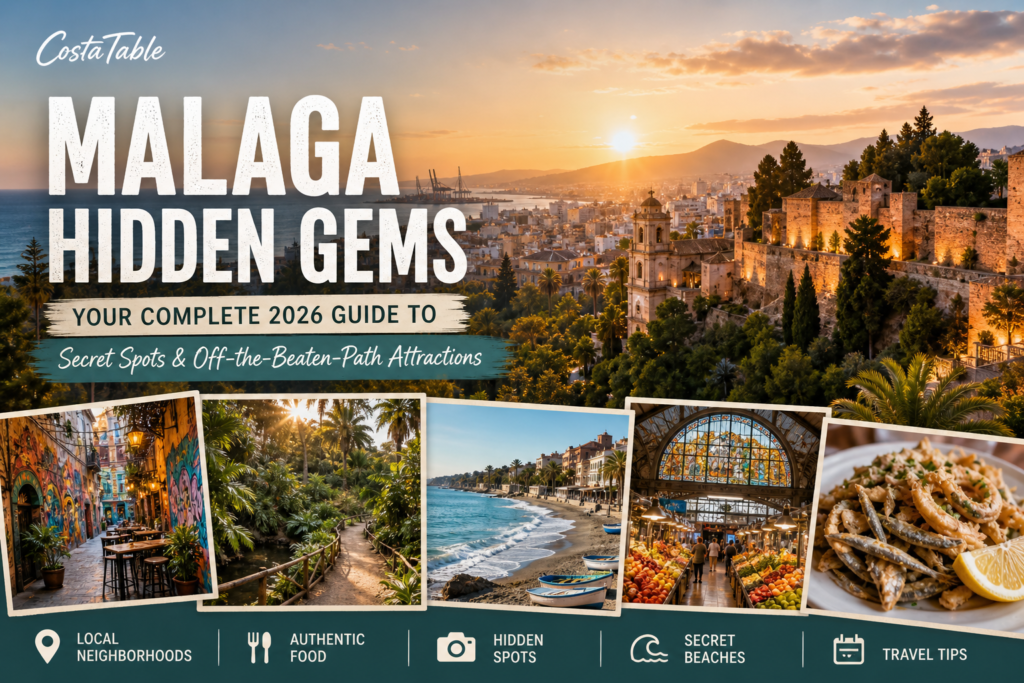
Malaga is way better than people think. It’s not Barcelona or Madrid or Seville. It doesn’t have the “wow” factor that Instagram-famous cities have. It’s a real city where real people live and work and eat and drink.
The tourist stuff is fine, but the actual Malaga is in these neighborhoods, these restaurants, these parks that tourists skip. The real experience is sitting in a local bar eating good food at cheap prices. It’s taking a bike ride along the coast. It’s walking through neighborhoods where nobody speaks English and tourists are basically nonexistent.
The beaches here aren’t Instagram perfect. The attractions aren’t world-famous. The restaurants don’t have Michelin stars. But everything is real. Everything is honest. Everything feels like an actual place instead of a theme park version of a place.
That’s why people live here. That’s why I spent two months exploring every corner of this city. That’s why I’m sharing this with you instead of just another generic “top 10 things to do in Malaga” list that’s been copied a thousand times by AI and other travel bloggers.
Come here. Eat good food at local prices. Walk neighborhoods where tourists don’t go. Talk to people. Sit in parks and just exist for a while. Watch sunsets from hidden beaches. Drink coffee at places where locals hang out. That’s Malaga. That’s what makes it worth visiting.
And if you find other hidden gems? Tell people. Share them. That’s how you keep places from becoming tourist traps. That’s how you keep cities actually livable and real.
Updated: 2026
Perfect for: People who want to actually experience a city instead of just checking boxes on a list
Difficulty: Easy – everything is accessible and affordable
Cost: Very cheap – good food, cheap transport, affordable accommodations if you stay outside the center

Frank Petersen is co-founder of CostaTable and lives just outside Málaga, where everyday life naturally revolves around food, cafés, and local restaurants. With a strong interest in finding places that actually deliver - not just look good - he spends much of his time exploring both well-known spots and those that are easier to miss.
His focus is simple. To cut through the noise and highlight places that are worth visiting, whether it’s a relaxed brunch, a good coffee, or a dinner that feels right from start to finish.
Through CostaTable, Frank aims to give readers a more honest and useful guide to the food scene in Málaga, helping them spend less time searching and more time enjoying.