Málaga has around 300 days of sunshine a year. That number gets quoted a lot, usually in the context of selling apartments or tourism packages, but it has a practical consequence that is worth thinking about: sitting outside is not a special occasion here. It is the default. On any morning from March through November, and on most mornings in December, January, and February too, you can sit at a terrace table in Málaga with a coffee and not feel the slightest urge to go inside.
The city has adapted to this. Terraces are everywhere — wide pavements lined with chairs, small squares with four or five tables tucked into the sun, rooftop spaces that open as the mornings warm up. The quality varies enormously. Some terraces are there because a café owner put three tables on the pavement and called it done. Others have been thought through: good chairs, some shade for the height of summer, a view worth looking at.
This guide covers the terraces worth sitting at — the ones where the combination of coffee, food, and the table itself makes the whole thing worth lingering over. The full café guide for Málaga covers the indoor options alongside these. The best coffee in Málaga goes deeper on the extraction side for those who care about what is in the cup as much as where they are sitting.
What makes a good Terrace in Málaga
Not every outdoor table is a terrace worth seeking out. In a city where the weather is reliably good, the bar for simply existing outside is low. The places worth going out of your way for have got something else going on.
Shade in summer. Between June and September the sun in Málaga is serious. A terrace without shade in July is unpleasant after about 10am. The good ones have awnings, parasols, or are positioned on the north side of a building where natural shade does the work. If you are planning a summer morning out, this is the first thing to check.
A view or a setting. Some terraces justify themselves entirely through where they are. A table on a square looking at the Cathedral. A rooftop over the port. A pavement café in a quiet residential street where the only traffic is neighbours walking dogs. The view does not need to be spectacular — it just needs to be something other than a car park or a busy road.
Chairs that invite staying. This sounds small and is not. A terrace with metal folding chairs and a wobbly table is technically an outdoor table but does not function as a terrace in the useful sense. The places worth lingering at have chairs you can sit in for an hour without noticing.
Good coffee to go with it. A terrace is only as good as what you are drinking at it. This is Málaga, so the baseline is high — the city has a genuine café culture that takes coffee seriously. But the difference between a good café con leche at a traditional bar terrace and a mediocre one at a tourist-facing café on the main drag is significant. The places in this guide get both parts right.
The best Terrace Cafés by neighbourhood
El Centro and the Historic Quarter

The historic centre has the highest concentration of terraces and the most variable quality. The squares around the Cathedral — Plaza del Obispo, Plaza de la Constitución — have outdoor seating at multiple cafés. The closer you are to the main tourist circuit, the more likely you are to be paying a premium for a mediocre coffee with a good view.
The better option is to walk one block back from the obvious squares. The streets that feed into Plaza de la Merced, the lanes around the Carmen Thyssen Museum, and the quieter sections of the Calle Álamos and Calle Granada corridor all have smaller terraces that are less visited, often better value, and occasionally significantly better coffee.
Plaza de la Merced is worth specific mention. It is a proper square — wide, plane trees providing shade in summer, a good mix of cafés and bars around the edges. The tables on the south-facing side get morning sun. Picasso was born on this square, which is the kind of thing that appears in every guide, but the terrace experience is genuinely good regardless of the historical context.
For a brunch with outdoor seating specifically, the Centro has several options that run terrace service through the mid-morning, including some of the Soho-adjacent places that have spread north into the lower centro.
Brief guide to the best terrace dining by location, organized for easy navigation.
El Pimpi
- Location: Calle Granada 62, Centro
- Terrace: Yes – Roman Theatre and Alcazaba views
El Pimpi is Málaga’s most iconic restaurant since 1971. The bustling terrace faces the illuminated Alcazaba at night. Legendary ajoblanco con mango, ensaladilla rusa, and house wine in terracotta jugs define the experience. Celebrity-signed barrels cover the walls. Touristy but earns every visitor.
Read full guide on CostaTable
Visit El Pimpi
Beluga
- Location: Pl. de las Flores 3, Centro
- Terrace: Yes – elegant outdoor seating
Beluga elevates Mediterranean cuisine with refined rice dishes and fresh seafood. Nearly Michelin-starred quality with elegant Plaza de las Flores terrace. Monkfish with shrimp, duck with foie – minimum two diners for rice dishes. Modern, sophisticated, special-occasion worthy.
La Cosmo
- Location: Calle Císter 11, Centro
- Terrace: Limited – focused on food quality
Michelin Bib Gourmand 2026. Chef’s hake salad learned from his mother is legendary. Exceptional quality-to-price ratio with impeccable sourcing. Intimate alley setting prioritizes food over ambiance. Reservations essential for locals and critics seeking authentic Spanish cuisine.
Read full guide on CostaTable
Visit La Cosmo
Uvedoble
- Location: Between Alcazaba and Cathedral, Centro
- Terrace: Yes – bar, table, and terrace seating
Small, unassuming farm-to-fork restaurant between historic landmarks. Ceviche of swordfish with Axarquía avocado, sautéed artichokes with cuttlefish, memorable giant meatball in almond sauce. Half or full portions encourage sharing. Authentic local dishes without tourist markup.
Read full guide on CostaTable
Visit Uvedoble
Casa de Guardia
- Location: Alameda Principal 18, Centro
- Terrace: Standing bar culture
Málaga’s oldest bar since 1840. Wine served directly from the barrel. Simple montaditos pair with local wines at fair prices. Two centuries of history in worn wooden counter and marble tables. Walk-in only – no reservations. Standing tradition essential to experience.
Soho
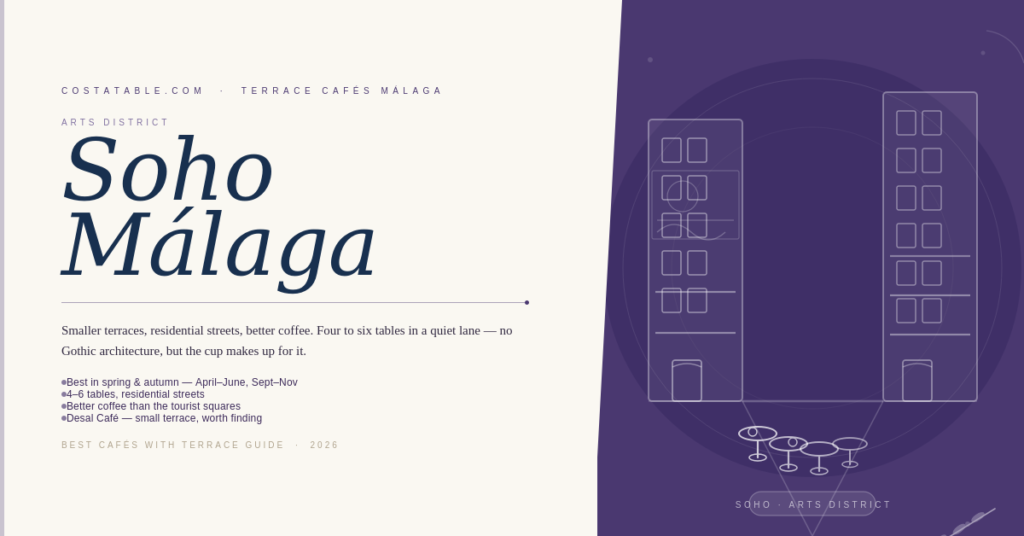
Soho terraces are different in character from the historic centre. The streets here are wider in places, the setting is less dramatic architecturally, but the cafés themselves are often better. The terrace at a good Soho café tends to be smaller — four to six tables — and in a residential street rather than a tourist square. You are looking at apartment buildings rather than Gothic architecture, but the coffee in the cup is considerably more likely to be worth drinking.
The Soho terrace experience is better in spring and autumn when the light is good and the tourists are fewer. In summer, the south-facing streets get very hot in the afternoon. In winter, the streets get surprisingly cold in the shade. The sweet spot is April through June and September through November.
The hidden cafés section of the hidden gems guide covers several Soho spots with outdoor seating that are worth finding — Desal Café in particular has a small terrace that works well on a good morning.
La Malagueta and the seafront promenade
The Paseo Marítimo — the coastal promenade that runs east from the port — has a string of café and chiringuito terraces that operate year-round. These are the terraces with the most straightforward appeal: you are sitting facing the Mediterranean, the light is extraordinary in the mornings, and the coffee is a secondary consideration to the setting.
The quality of the coffee and food at seafront terraces varies. The best approach is to walk further east than you think necessary. The terraces closest to the port attract the most tourist traffic and charge accordingly. Walking ten or fifteen minutes east toward La Malagueta beach, and then further toward the residential promenade, gets you to places where the tables face the same sea at lower prices and with better food.
Breakfast here — tostadas, freshly squeezed orange juice, café con leche — eaten with the water in front of you is one of the genuinely good morning experiences the city offers. It does not require finding a hidden gem. It requires walking slightly further than most people bother to.
Los Melizos
- Location: Soho neighborhood
- Terrace: Yes – small residential street terrace
Soho institution with seafood focus and local atmosphere. Grilled fish, traditional paella, chanquetes (small fish) with fried eggs. Modest terrace away from tourist circuit. Intimate residential setting, consistent execution, genuine hospitality. Where locals bring visitors wanting authentic meals.
Desal Café
- Location: Soho
- Terrace: Yes – small quiet terrace
Specialty coffee destination on quiet residential street. Serious extraction, single-origin beans, quality pastries. Small intimate scale preserves morning focus. Baristas understand coffee science yet remain approachable. Laptop-friendly environment. Digital nomads and coffee enthusiasts gather here daily.
Pedregalejo
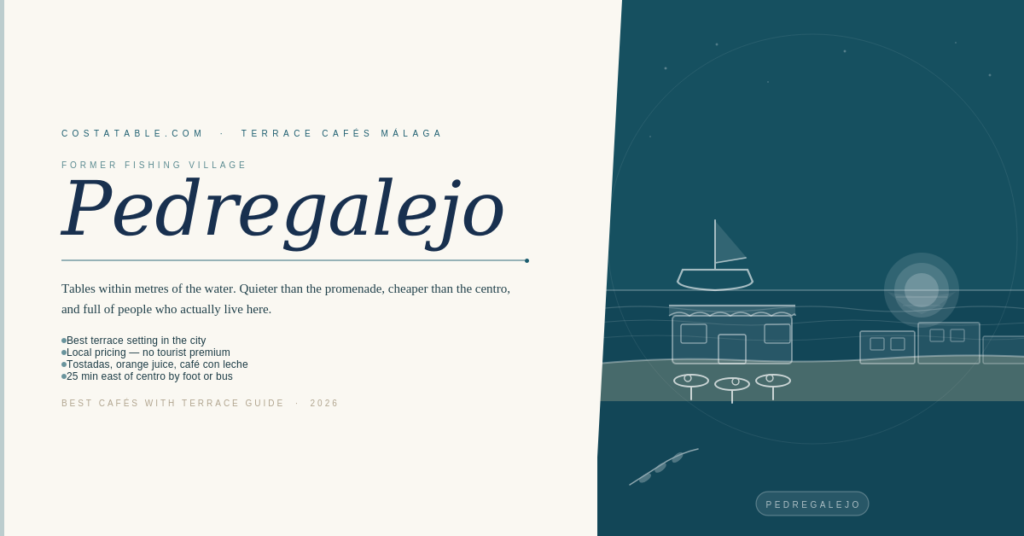
The beach neighbourhood east of La Malagueta has the best terrace situation in the city for anyone who wants outdoor eating without tourist pricing. The small restaurants and cafés along the Pedregalejo seafront have tables that are, in some cases, within metres of the water. The setting is quieter than the main promenade. The pace is slower. The people at the other tables are mostly local.
The terraces here work best for mid-morning coffee and a simple breakfast, or for the extended lunch that transitions into an afternoon at the beach. They are not, for the most part, specialty coffee destinations — the coffee is the standard Málaga café con leche, which is good but not notable. What they offer is atmosphere and setting that the more visited parts of the city cannot match.
For anyone combining terrace sitting with a longer day in this neighbourhood, the hidden gems guide covers the best stops in Pedregalejo across all mealtimes.
MariCarmen Casa – Playa
- Location: Penon del Cuervo beach, Pedregalejo
- Terrace: Yes – meters from water
Local, peaceful Pedregalejo gem quieter than central promenade. Meters from Mediterranean. Espetos de sardinas grilled over open flame. Fresh orange juice, traditional coffee, simple breakfast. Mostly local crowd preserving neighborhood atmosphere. Walking east requires effort – rewards with authenticity.
El Cachaote
- Location: La Malagueta beach, Paseo Marítimo
- Terrace: Yes – beachfront with sea views
Chiringuito philosophy: minimal pretension, maximum pleasure. Sand, sea, sun, fresh seafood prepared simply. Grilled fish with salt and olive oil, espetos de sardinas on wooden skewers. Family-friendly, children transition naturally to beach. Mediterranean light extraordinary morning and sunset.
El Tintero
- Location: Beach, east of La Malagueta
- Terrace: Large open-air (yum cha style service)
Interactive seafood experience – servers circulate with freshly cooked plates. Diners select directly from kitchen offerings. Large terrace buzzes with social energy. Perfect for groups celebrating occasions. Theatrical presentation elevates simple seafood. Beach access immediate. Arrive early for good terrace positioning.
La + Fría
- Location: El Palo beach
- Terrace: Yes – beachfront terrace
Casual, seafood-focused beach dining. Fresh fish grilled simply, traditional paella, espetos de sardinas. Unobstructed sea views, consistent Mediterranean light. Local crowd, authentic beach atmosphere. Afternoon visits optimal with perfect light and quieter crowds. Sunset transforms terrace through changing light.
Rooftop Terraces
A separate category worth addressing: Málaga has a growing number of rooftop terraces on hotels and apartment buildings that open for breakfast and brunch. The views from these are, in most cases, spectacular — the Cathedral, the Alcazaba, the port, the bay, the mountains behind the city. The coffee and food is more variable.
A few things to know about rooftop terraces specifically. They tend to open later than ground-level cafés — often from 9am or 10am — and they fill up quickly on weekends. The wind at height can be significant on days when the street level is still. The prices are consistently higher than equivalent food at ground level, and whether the view justifies the premium depends on what you are looking for.
The rooftop brunch guide for Málaga covers the best options in this category specifically, including which ones have good food alongside the views and which are trading primarily on the setting.
ÀTICO Bar & Restaurant
- Location: AC Hotel Málaga Palacio – 15th floor, Centro
- Terrace: Yes – panoramic rooftop
15-floor elevation transforms city into geography. 360-degree views: cathedral, harbor, Mediterranean, mountains. Fine dining, Mediterranean cuisine emphasizing seasonal ingredients. All-day service from breakfast through dinner. Refined preparation, excellent service. Wind occasionally requires layers – adds character. Most dramatic rooftop experience.
Mi Niña Lola Terrace
- Location: Rooftop, elevated above tourist areas
- Terrace: Yes – soothing setting
Sophisticated yet warm. Spanish tradition blended with Japanese refinement. Cod balls with miso mayo, fresh pipirrana salad, creative seafood. Rooftop removes you from crowds while maintaining city connection. Attentive service, calm atmosphere. Serious cooking expressed without pretension. Contemporary dining evolution.
Terraza Chinitas
- Location: 4 floors up, small corridor streets, Centro
- Terrace: Yes – intimate rooftop
Casual rooftop bar proving expensive venues unnecessary. Wallet-friendly cocktails, excellent music, genuine hospitality. Recently opened but already classic among locals. Intimate scale maintains character. Sunset captures cathedral and rooftops in golden light. Weekend social gathering point.
Parador de Gibralfaro – Restaurant El Mirador
- Location: Mount Gibralfaro (10-15 min outside center)
- Terrace: Yes – hillside rooftop
Málaga’s most romantic dining destination. Combines spectacular setting with genuinely good food and unhurried service. Panoramic Mediterranean and city skyline views. Spanish cuisine, fine dining. Romantic atmosphere requires no forcing – natural beauty establishes tone. Overnight hotel option extends celebration.
Practical notes on terrace sitting in Málaga
When to arrive: On weekends between April and October, the best terrace tables at popular spots fill up between 10am and 11am. Arriving at opening time — usually 8:30am to 9am at most places — gets you a table without waiting and often the most pleasant part of the morning before the sun becomes intense.
Sun and shade: The sun moves fast in Málaga. A terrace that is perfectly shaded at 9am can be in full sun by 11am, or vice versa. If shade matters to you, ask when you arrive which tables stay shaded longest, or check which way the building faces before sitting down.
Noise: The terraces on busy pedestrian streets in the centro can be noisy from late morning onward. If a quiet coffee is the point, the smaller terraces in residential streets — particularly in Soho — are more reliably calm.
Prices: A café con leche at a terrace table in Málaga is typically twenty to fifty cents more than the same thing at the bar inside. This is standard across Spain. At tourist-facing terraces on the main squares, the premium can be higher. At traditional bars with a few pavement tables in residential neighbourhoods, there is often no difference.
What to order: For a classic Málaga terrace morning — tostada with aceite y tomate, freshly squeezed orange juice, café con leche — budget around five to eight euros depending on the neighbourhood and the type of café. This is one of the best-value morning meals in any European city.
Quick Reference Guide
Best for Morning Coffee & Light Breakfast:
- Desal Café (Soho)
- El Cachaote (Pedregalejo & Seafront)
- MariCarmen Casa (Pedregalejo & Seafront)
Best for Lunch with Local Atmosphere:
- El Pimpi (Centro)
- Los Melizos (Soho)
- Uvedoble (Centro)
Best Seafront/Beachside Experience:
- El Tintero (Pedregalejo & Seafront)
- La + Fría (Pedregalejo & Seafront)
- MariCarmen Casa (Pedregalejo & Seafront)
Best Rooftop/Elevated Views:
- ÀTICO (Rooftop – 15th floor)
- Mi Niña Lola (Rooftop – elevated, quiet)
- Parador de Gibralfaro (Rooftop – romantic)
Best for Evening Drinks & Sunset:
- El Pimpi (Centro – Alcazaba views)
- Terraza Chinitas (Rooftop – downtown)
- Parador de Gibralfaro (Rooftop – Mediterranean)
Best Quality-to-Price:
- La Cosmo (Centro – Michelin-recognized)
- Uvedoble (Centro – farm-to-fork)
- Casa de Guardia (Centro – historic, cheap)
Practical Tips from the Terrace Guide
When to visit: May, June, September, October – excellent weather, manageable crowds, extraordinary light
Shade in summer: June–September sun is intense. Check which tables stay shaded longest. North-facing buildings provide natural shade.
Noise considerations:
- Quieter: Soho residential streets
- Bustling: Centro main squares
- Peaceful: Pedregalejo and El Palo beaches
Arrival times:
- Weekend peak: 10am–11am at popular spots
- Best experience: Arrive at opening (8:30–9am) for quiet morning atmosphere
How this fits into the wider Café silo
The terrace experience is one part of the café scene in Málaga. The best cafés in Málaga is the starting point for the whole picture — indoor and outdoor, traditional and specialty, across all neighbourhoods. The best coffee in Málaga is for those who want to go deeper on the quality side of what is in the cup.
For morning eating more broadly, the best brunch spots in Málaga covers the sit-down meal options — many of which have terrace or outdoor seating — and the best breakfast cafés focuses specifically on the early morning options across the city.
And if what you are really looking for is the full Málaga day — coffee in the morning, lunch at a market restaurant, espetos at sunset, dinner in the city — the complete restaurant guide for Málaga covers all of it in one place.
Further reading
Málaga’s terrace culture makes most sense when you understand the streets you are sitting in. A morning coffee on a square in the historic centre hits differently once you know what you are looking at — which building is which, why the square is shaped the way it is, what happened in the neighbourhood over the last few centuries. The Málaga old town tour guide on Lifecosmo covers exactly this: the architecture, the history, and the character of the quarter that contains most of the terraces in this guide. It pairs naturally with a slow morning on foot between café stops.
For transport between neighbourhoods, beach access information, and a map of the city’s public squares and promenades, the official Málaga city tourism website is the most reliable practical resource before a visit.
Frequently Asked Questions
Do Málaga cafés have terraces year-round? Most do, yes. The climate makes outdoor seating viable in every month of the year, though some smaller terraces reduce their outdoor seating in December and January. The high season for terrace sitting is April through October. Winter mornings are often sunny enough for outdoor coffee, but bring a layer — it gets cold quickly once you are sitting still in the shade.
Are terrace cafés more expensive in Málaga? Slightly, usually. A surcharge of twenty to fifty cents per drink for terrace service is standard. At tourist-facing cafés on main squares this can be higher. At traditional neighbourhood bars the price is often the same inside and out.
Which neighbourhood has the best café terraces in Málaga? For setting and views, La Malagueta seafront and Pedregalejo. For coffee quality with outdoor seating, Soho. For the combination of architecture and terrace, the squares around Plaza de la Merced and the streets adjacent to the Cathedral. For the best value, anywhere east of the main tourist circuit.
Can I bring a laptop to a terrace café in Málaga? At most Soho cafés, yes — outdoor working is common and accepted. At traditional bars and seafront chiringuitos, less so — the vibe is more social than solitary. At rooftop hotel terraces it varies. If you plan to work, the smaller Soho terraces are the most reliably laptop-friendly outdoor spaces in the city.
What is the best time of year for terrace cafés in Málaga? May, June, September, and October are the best months. The weather is excellent, the crowds are manageable, and the light — particularly in the hour after sunrise and the hour before sunset — is extraordinary. July and August are fine but hot, and the main tourist areas are at their most crowded. November through March is quieter and often beautiful, with enough warm days to sit outside comfortably.
Last updated: April 2026. Opening hours and terrace availability change seasonally — check before visiting.

Frank Petersen is co-founder of CostaTable and lives just outside Málaga, where everyday life naturally revolves around food, cafés, and local restaurants. With a strong interest in finding places that actually deliver - not just look good - he spends much of his time exploring both well-known spots and those that are easier to miss.
His focus is simple. To cut through the noise and highlight places that are worth visiting, whether it’s a relaxed brunch, a good coffee, or a dinner that feels right from start to finish.
Through CostaTable, Frank aims to give readers a more honest and useful guide to the food scene in Málaga, helping them spend less time searching and more time enjoying.