Things to do in Granada: a real traveler’s guide to Spain’s most atmospheric city
I wasn’t planning to spend three days in Granada. I had a flight to catch. But Granada has this way of making you change your plans.
Most of the things to do in Granada that people talk about involve the Alhambra. And yes, the Alhambra is incredible. But if you think Granada is just the Alhambra, you’re missing something important. This city works on you. The narrow medieval streets, the way light hits the white buildings at sunset, the tapas that actually taste like someone cared about making them – these are the things that stay with you.
I’ve been back to Granada maybe six times now, and every time I find something new. A bar I’ve never been to. A viewpoint I didn’t know existed. A street that leads somewhere interesting. This is a Granada travel guide for people who want more than just the famous attractions. If you’re thinking about a Granada day trip from Málaga, or maybe combining Granada and Nerja in one trip, this covers all the best Granada attractions and places to visit in Granada that actually matter.
1. The Alhambra – actually do it properly this time
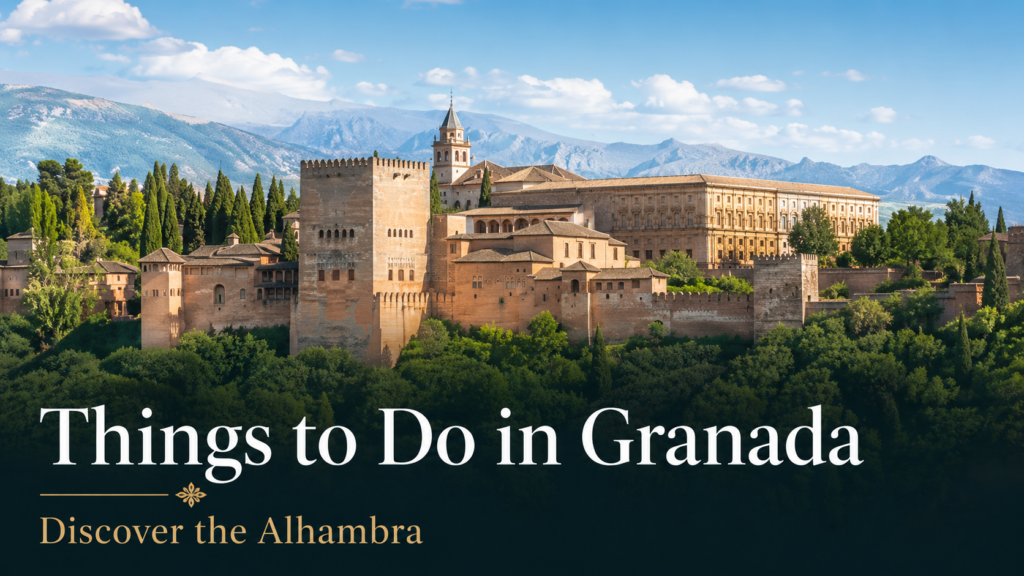
Everyone wants to see the Alhambra. It’s probably why you’re looking at things to do in Granada Spain in the first place. And yes, the Alhambra is one of the best Granada attractions. But here’s what I’ve learned: most people experience it completely wrong.
The Alhambra isn’t just a palace sitting there. It’s this enormous complex spread across a hillside – palaces, fortresses, gardens, towers – built over centuries by different rulers. You cannot see all of it properly in an afternoon. If you try, you’ll spend the whole time either rushing through or standing in lines. That defeats the entire point.
Here’s what actually works:
Book tickets at least two weeks ahead. Non-negotiable. Morning slots fill up fast and you need one. You get assigned specific time slots for different sections, which sounds annoying but it’s actually the only way to manage the crowds and make the experience bearable.
Arrive at 8:30 or 9:00 AM when they open. You get maybe two hours before things get absolutely packed. Use that time in the Palacios Nazaríes – the main palace area. This is the core of the best attractions in Granada. The carvings, the water fountains, the tiles, the whole Islamic architecture thing. It hits differently when you’re not rushing.
The Generalife gardens? Do those later in the afternoon when you’re already tired. Gardens are meant for sitting and spacing out, not power-walking through. They’re actually the most beautiful part – water channels running through cypress trees, views back across the entire city. Sit there for 20 minutes and just let it sink in.
What actually matters:
- 4-5 hours minimum if you want to actually absorb things
- Rent the audio guide – it makes the place make sense instead of just being pretty walls
- Comfortable shoes are mandatory – the ground is uneven everywhere
- Light changes dramatically throughout the day – early morning is harsh, afternoon turns golden, evening is dramatic
- If you can afford it, go twice – morning for seeing details, evening for the atmosphere
The Alhambra is a top Granada attraction but most people don’t give it the time it deserves.
2. Mirador de San Nicolás – where you actually see the Alhambra
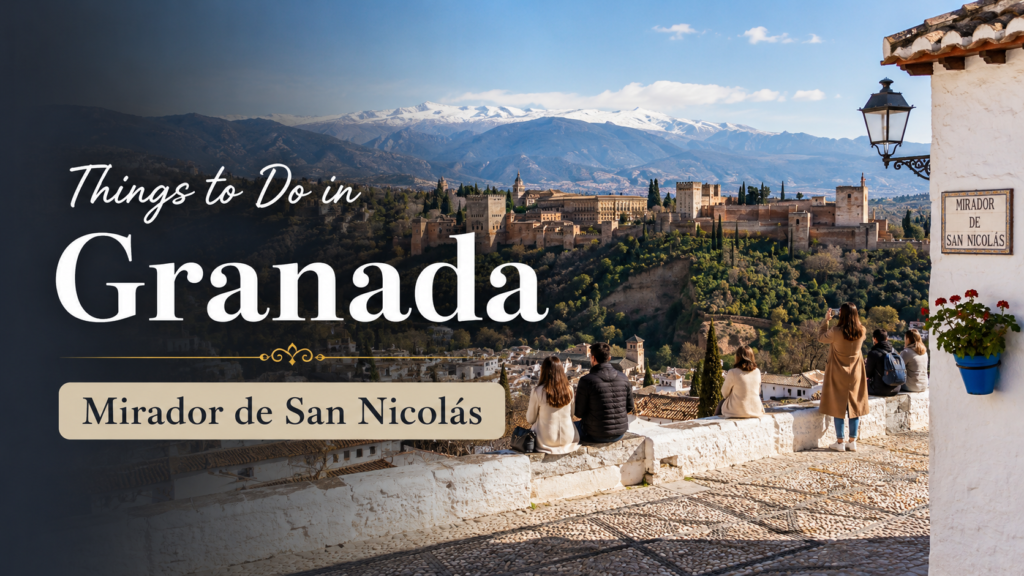
While everyone is inside the Alhambra looking at tiles and taking selfies with stone walls, the actual best view of the whole thing is from across the city in the Albaicín neighborhood.
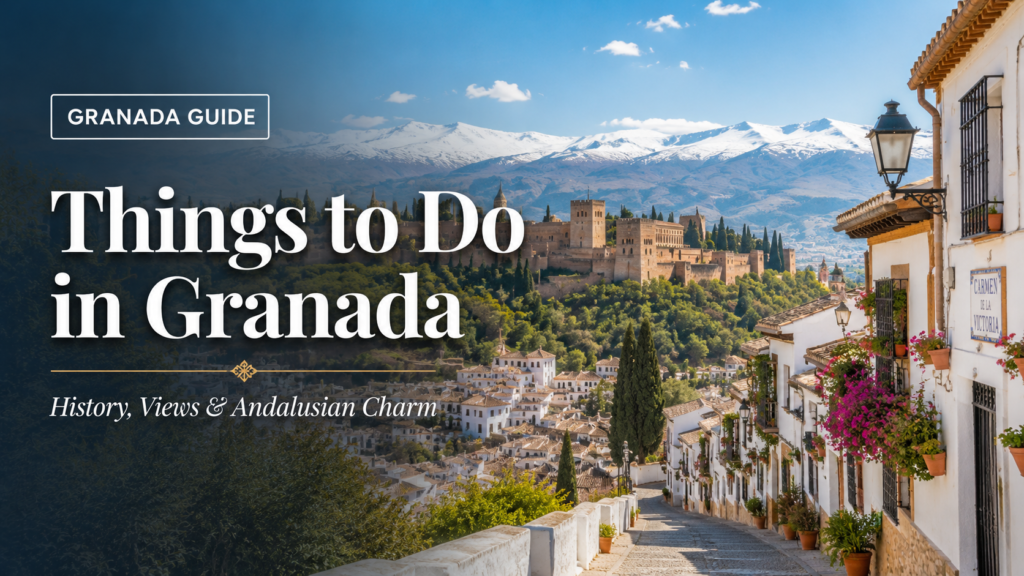
Mirador de San Nicolás is basically a platform overlooking the valley. That’s it. But from here you see the entire Alhambra fortress spread across the hillside, with the Sierra Nevada mountains behind it. At sunset, this view is genuinely one of the things to do in Granada that actually stays with you.
Here’s the reality though: it’s crowded. Really crowded. Especially at sunset when every tour group has marched their people up there. If you want the experience without fighting through crowds, go early. Like 8:00 AM. The light is different – softer, clearer – and you might actually be alone for a moment.
Or go in the middle of the day when everyone’s inside the Alhambra eating lunch. Bring a coffee, sit there for 20 minutes. Watch how the shadows move across the fortress.
The viewpoint is literally in the middle of the Albaicín, so you can combine this with exploring the old quarter. This is where the real Granada lives. Walk the narrow streets, get intentionally lost, find small plazas where locals actually sit, stop at bars for a drink. This is medieval Moorish Granada – it’s where the city actually exists instead of just being a postcard.
Pro tip: The walk up to the mirador is steep and on uneven cobblestones. Wear shoes you can actually walk in, not what looks good in photos.
3. Albaicín – this is where Granada actually is
The Albaicín is the old Moorish quarter, and honestly, this is what to do in Granada when you want to understand the city beyond the tourist attractions. It’s a maze of narrow streets, white buildings, small plazas, and places that feel genuinely lived-in by actual people.
Most tourists do the main streets and leave. That’s the wrong move. The real experience is in the side streets where locals work, shop, eat, and live. You’ll find things that matter:
- Small bars where tapas are actually free with your drink – sit down, order a beer, food appears
- Shops selling local work – ceramics, leather – actual quality stuff, not plastic souvenirs
- Tiny plazas where people sit in evenings talking
- Random street corners with views across the whole city
- The Cathedral area with real historical weight
- Street art and actual local character
How to do this properly:
Don’t use a map. Seriously. Put your phone away. The Albaicín is small enough that you can’t get lost permanently, and the whole point is wandering. Turn down streets that look interesting. Stop when something catches your eye. Sit at a bar when you’re tired.
Go in the early evening, around 6-7 PM, when locals are actually coming out. That’s when the neighborhood feels alive instead of like a museum.
Wear comfortable clothes and shoes. You’ll walk on steep, uneven cobblestones for hours. It’s not hard, just constant.
Bring water. There aren’t many fountains and you’ll get thirsty from walking.
Start from the top near San Nicolás and work your way down. This way you go downhill and don’t end up climbing back up when you’re exhausted.
This is honestly one of the best places to visit in Granada and places to do in Granada Spain that most visitors miss completely.
4. Sierra Nevada – mountains that change everything

Granada sits right in the foothills of the Sierra Nevada. You can literally see snow peaks from the city streets. This is wild for a place that has beaches 90 minutes away. It’s one of those geographic things that explains why Granada is different from everywhere else on the coast.
If you’re looking for things to do in Granada beyond the city center, the mountains offer completely different Granada attractions:
White villages Granada – Las Alpujarras:
About 45 minutes from the city, the landscape completely changes. Villages like Pampaneira and Capileira sit in the mountains looking like they haven’t changed since the 1800s. You drive through these incredible winding mountain roads and suddenly you’re somewhere completely different. The drive itself is beautiful. The villages are quiet and authentic. You can hike between them if you want. Or just eat lunch in a local restaurant and sit around watching the world move slowly.
Hike in Las Alpujarras:
Real hiking with views of mountains and the Mediterranean. A moderate hike takes 3-4 hours and shows you landscape you didn’t know existed. This is what to do in Granada Spain if you want something physically different.
Pico de Veleta:
One of the highest peaks. You can drive to the top – it’s a winding road that’s dramatic – or hike it if you’re into that. On clear days you can see both the Mediterranean and North Africa from the top. It’s genuinely surreal.
Pradollano ski resort:
Even if you don’t ski, the drive up the mountain is spectacular. In winter, actual skiing. In summer, hiking and mountain scenery at high elevation.
The mountains completely change how you understand Granada. The city isn’t isolated – it’s on a crossroads between mountains and the sea, between climates, between regions. That’s why it feels so different from everywhere else.
5. Sacromonte and the cave houses
Sacromonte is the neighborhood built into the hillside where historically Roma (Gypsy) people lived in cave houses carved into the rock. It’s a different Granada than the Albaicín – more bohemian, more alternative, more raw.
You can walk through the neighborhood and see the cave houses – some are still residences, some have been turned into shops or bars. There’s an abbey up there with views across the city. The neighborhood feels authentic in a way that’s becoming rare in touristy Spain.
What to do:
Walk through the caves. Some are open to visitors, some are private. Respect the ones that are clearly someone’s home.
Go to the Abbey – Abadía del Sacromonte. It’s not flashy but it has context and views. The monks here have lived in caves for centuries.
Stop at one of the cave bars. There are several that serve drinks and food from cave spaces. It’s touristy but it’s also the real thing – people actually live here.
Go in the late afternoon when the light is golden. The whole neighborhood looks different depending on the light.
Watch out for the steep paths. Sacromonte is built on a hillside and everything is steep. Wear proper shoes.
6. Cathedral and Royal Chapel – history actually matters here
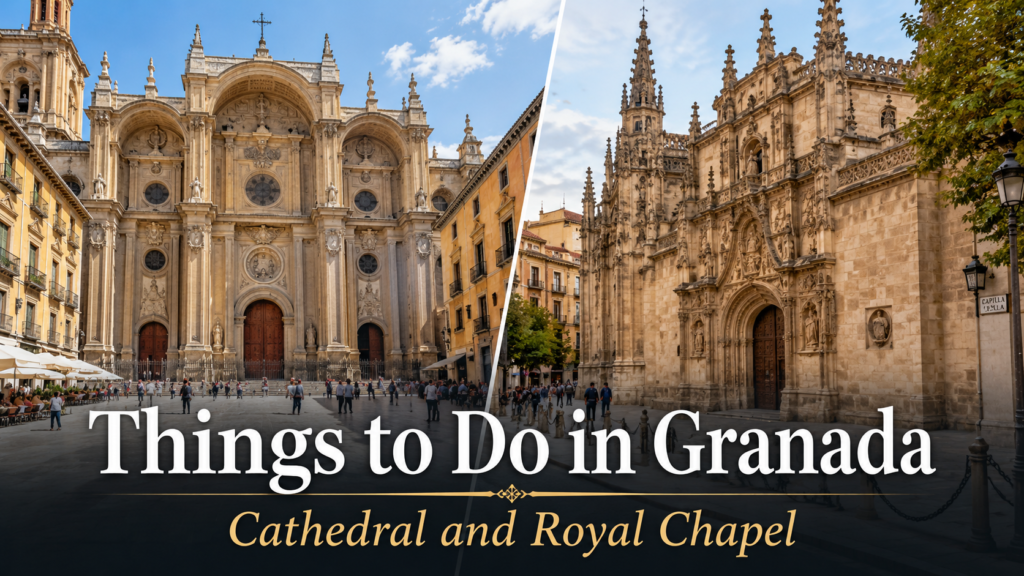
The Cathedral is in the center of the city and it’s genuinely impressive – built after the Reconquista when Catholic monarchs took over Granada from the Muslim rulers. It’s massive and it tries to show off the power of the Spanish crown.
Next to it is the Royal Chapel, where the Catholic Monarchs (Isabella and Ferdinand) are actually buried. Their tomb is there, along with other royalty. It’s surprisingly intimate for such a historically significant place.
Why it matters:
This is where the shift happened – from Islamic Granada to Christian Granada. The Cathedral was built on the site of the Grand Mosque. You can see the architectural styles clash if you pay attention. The Cathedral is Spanish and Christian. But the city around it still feels Moorish.
The tombs themselves are moving. There’s a directness to being in the presence of these historical figures, even though they’re just bones and monuments now.
Practical:
It costs money to get in, unlike the Cathedral itself which is free. The Royal Chapel entrance fee is worth it if you care about history. If you don’t, you can skip it.
The Cathedral is worth walking through even if you don’t pay for the full tour. The scale of it is impressive. The interior is dark and dramatic.
Go in the morning if you want to actually see details. Afternoon light gets weird in there.
7. Tapas crawl through the real Granada
This is where Granada separates itself from everywhere else in Spain. In most cities, you pay for food and maybe get a small tapa. In Granada, you still get free tapas with every drink. Not tiny things – actual food.
This is dying out in the tourist areas, but it’s still alive in the real neighborhoods away from the main plazas.
Where to go:
Plaza Nueva area – it’s touristy but it’s where the tradition started. Get a drink, get food. Repeat. You’ll spend maybe €15-20 for an evening of eating and drinking.
Albaicín side streets – find small bars where locals drink. The food is better here because it’s not made for tourists, it’s made for people who have to eat here every day.
Realejo neighborhood – this is where young people hang out. It has energy and good bars.
Just wander and find places. If a bar looks crowded with locals and not tourists, go in there. Order a drink. See what they bring you.
If you want to compare Granada’s tapas culture to what’s happening in Málaga, check out the best restaurants in Málaga and Málaga’s hidden gem dining spots – the food scene is different but equally interesting.
What to expect:
Jamón ibérico (expensive ham) – it’s good and they give you actual slices.
Local cheeses from the mountains.
Espinacas con garbanzos (spinach with chickpeas) – Granada speciality.
Boquerones en vinagre (anchovies in vinegar) – sounds weird, tastes great.
Rabo de toro (a cold soup) – perfect in summer.
Croquetas – always good, always different depending on where you are.
The point isn’t to eat fancy. The point is to experience how Granada actually eats. You sit at a bar, you have a drink, food appears, you eat, you have another drink, more food. It’s simple but it works.
8. Darro River walk and the lower city
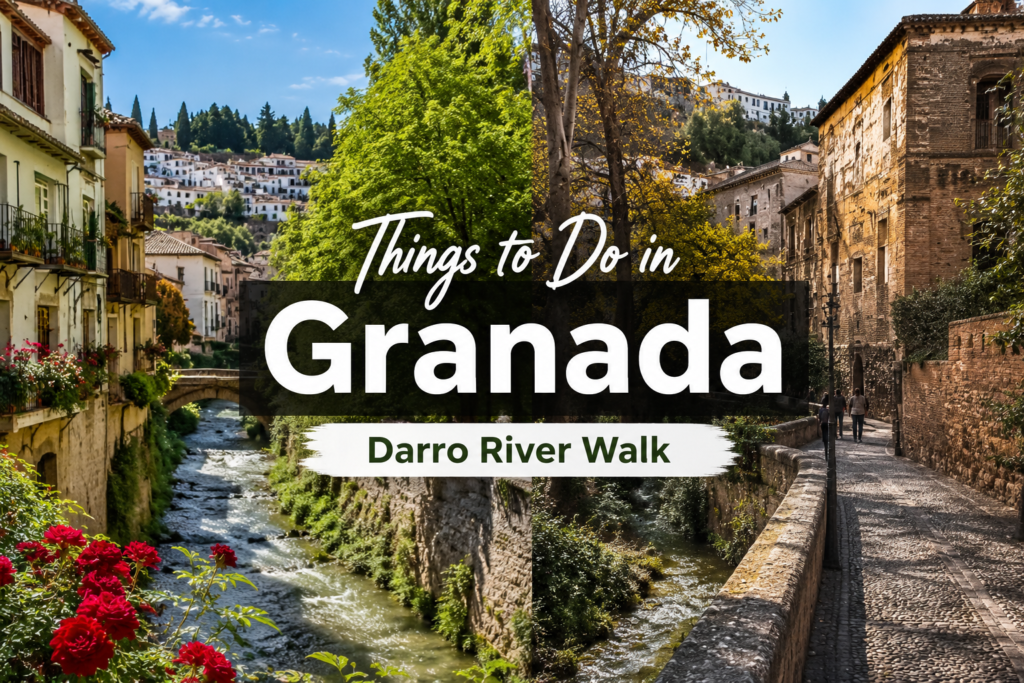
The Darro River runs through Granada and there’s a walk along it that most tourists never do. It takes you through the lower city, past old mills, through parks, and shows you Granada from a different angle.
Start at the Cathedral area and follow the river downstream. The path isn’t always obvious but it’s there. You’ll walk under bridges, past old water mills that are being restored, through neighborhood streets.
The walk takes about an hour and it’s easy – no hills, mostly flat. You end up in a completely different part of the city than where you started.
This is where you see Granada’s infrastructure – how water moved through the city, how it powered mills, how the city was actually built and functioned.
There are small bars along the walk where you can stop. Local neighborhoods that tourists never see. Parks where people actually sit and do nothing.
9. Stay in a cave house or riad
Granada’s accommodation game is different because you can actually stay in traditional cave houses or riads (traditional Islamic houses built around a central courtyard).
Staying in a cave house in Sacromonte is a wild experience – you’re literally in a house carved from the hillside. Some are fully modern inside, some have kept original elements. You wake up looking at stone walls that have been there for centuries.
Staying in a riad in the Albaicín puts you in the middle of the medieval city. You wake up to street sounds, the call to prayer from the nearby mosque, people speaking Spanish and Arabic.
Both options put you in the city instead of in a generic hotel. You experience how people actually live there.
10. Alhóndiga market and local food scene
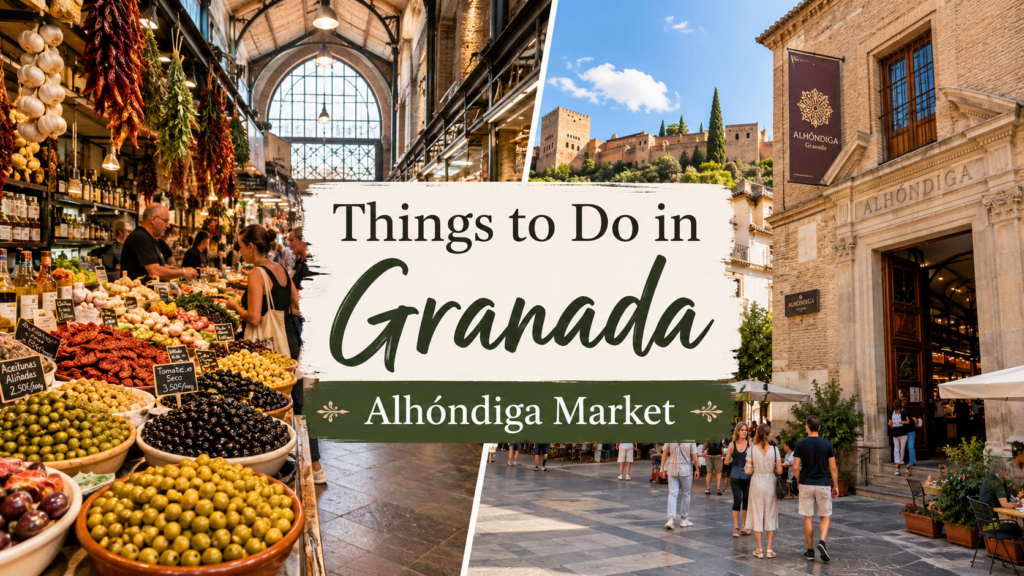
The Alhóndiga is a 16th-century market building that’s been restored and turned into a food hall. It’s where locals buy food – produce, meat, fish, prepared foods.
You can walk through and see what Granada eats. Buy ingredients. Some stalls sell prepared food that you can eat right there. It’s cheap, it’s real, it’s where actual commerce happens instead of tourism commerce.
Next to it are bars where locals go for breakfast or a mid-morning drink. Sit at a bar counter, order coffee and a tostada or a small plate of jamón. €3-5. That’s Granada.
Day trips from Granada – expand your Granada travel guide experience
White villages Granada – Las Alpujarras
If you want to understand white villages Granada, Las Alpujarras is it. About 45 minutes from the city you enter a completely different landscape. Villages like Pampaneira, Capileira, and Órgiva feel untouched by time. White buildings, narrow streets, local culture that hasn’t been commercialized to death.
You can stay overnight and actually hike between villages. Or do a Granada day trip – drive up, walk around, eat lunch, come back. The drive through the mountains is worth the entire trip alone. This is one of the things to do in Granada Spain that changes how you see the region.
Granada day trip to Málaga – combining city and coast
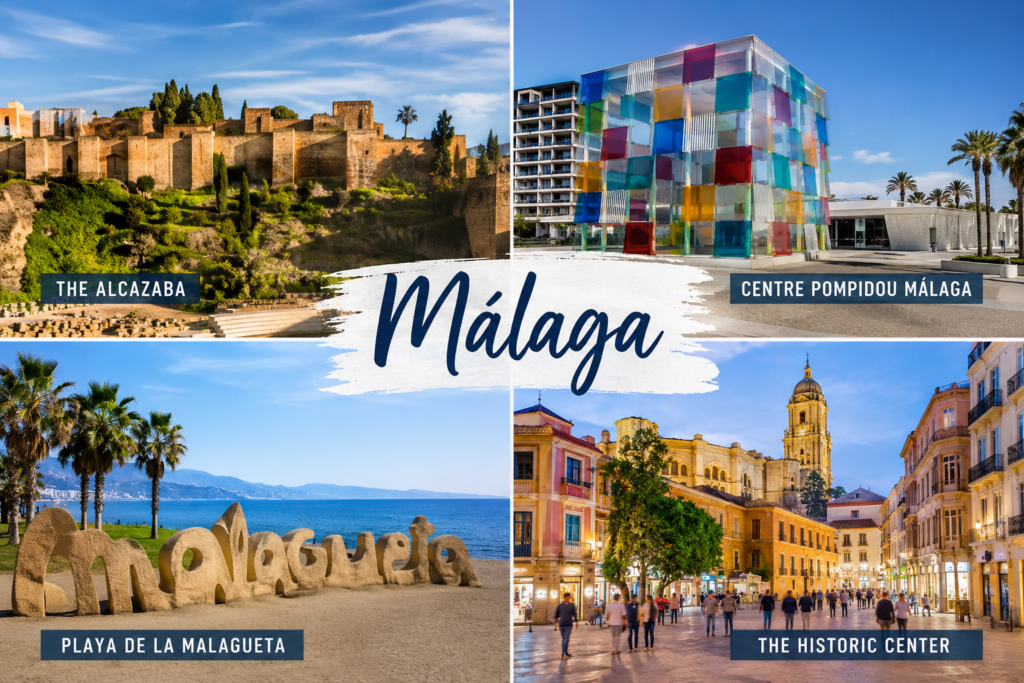
If you’re staying on the coast, Granada works perfectly as a day trip to Málaga. About 90 minutes by car, you can drive up in the morning, spend the day exploring the Alhambra and Albaicín, and head back to the coast for sunset dinner.
Before you go, plan where you’ll eat. Check out the best restaurants in Málaga and best dinner spots in Málaga to find good places for when you get back to the coast. If you’re doing a Granada day trip from Málaga and want to know about breakfast options, best brunch places in Málaga has solid recommendations for before you leave.
The drive between Granada and Málaga is straightforward on the A7. Take it early, avoid afternoon traffic coming back.
Granada and Nerja day trip – combining two worlds
Here’s the real talk about Granada and Nerja: they’re different enough that doing both makes sense if you have time. The coast is about 90 minutes from Granada and it’s a completely different world. Nerja is a beach town with caves and dramatic cliffs. You can do a Granada and Nerja day trip that starts in Granada, drives to the coast, and comes back.
Or better yet, stay two nights and split your time between both. The drive between them is beautiful anyway – you go through the mountains and come down to the sea. If you’re thinking about a Granada day trip from Málaga combined with Nerja, you could string all three together: coast → Granada → Nerja → coast.
Read the full best things to do in Nerja guide to plan what you actually want to see before you go. And if you’re island-hopping between Málaga and Nerja, check out the hidden gems in Málaga that most tourists miss.
Monachil and the pampas – hiking outside the city
Just outside the city limits are beautiful areas for hiking. Las Pampas del Monachil has river walks with waterfalls. It’s green and different from the dry city, and you can do it as a half-day trip. This is easy things to do in Granada if you want to get out without committing to a full day trip.
If you want to combine hiking with food, best lunch spots in Málaga has options nearby if you’re driving back toward the coast afterward.
Planning a Granada day trip? Check the official Granada tourist information for current events, transport options, and recommendations. If you’re combining Granada with the coast, the best cafés with terraces in Málaga are perfect for post-Granada relaxation with views.
Monachil and the pampas – hiking outside the city
Just outside the city limits are beautiful areas for hiking. Las Pampas del Monachil has river walks with waterfalls. It’s green and different from the dry city, and you can do it as a half-day trip. This is easy things to do in Granada if you want to get out without committing to a full day trip.
Practical information for Granada
When to go
Spring (April-May) – Perfect weather, not too hot, everything is blooming, fewer crowds than summer. This is the best time.
Fall (September-October) – Still warm, fewer crowds, the light is dramatic. Also excellent.
Summer (June-August) – It’s hot. Really hot. The city is packed with tourists. If you go, go early in the morning and rest in the afternoon. Or skip it.
Winter (November-March) – Can be rainy and cold. The Sierra Nevada gets snow so the city can feel gloomy. But you’ll have the place to yourself and it’s atmospheric.
Getting there
From Málaga – About 90 minutes by car, or there are buses that take around 2 hours. If you’re doing a Granada day trip from Málaga, driving gives you flexibility to explore on the way and come back whenever you want.
From Nerja – About 100 minutes by car. Scenic drive through mountains. This is a popular route if you’re combining Granada and Nerja in one trip.
By train – There are trains but they’re not convenient. The bus or driving is better if you’re planning a Granada day trip from the coast.
Where to stay in Granada – location changes everything
Where you sleep changes how you experience Granada. This matters more than you think.
Albaicín – Stay in the middle of the action, in a riad or traditional house. Where to stay in Granada if you want to be in the heart of the medieval city. You’re in the city, you experience it directly. Can be noisy, especially on weekends, but that’s the price of being where things actually happen.
Sacromonte – Stay in a cave house. Where to stay in Granada if you want something unique. Unique experience, quieter than Albaicín, still walkable to everything. You literally sleep in a house carved from the hillside.
Center (near Cathedral) – More convenient but less atmospheric. Where to stay in Granada if you want comfort over experience. Good for people who need easy access and less chaos.
Realejo – Local neighborhood with good bars and restaurants. Where to stay in Granada if you want to feel like a local instead of a tourist. More real than Albaicín but less historic than Sacromonte.
Food and where to eat
Don’t eat near the Alhambra – Tourist trap prices, mediocre food. Walk away from the main sites.
Albaicín side streets – Find small bars, get free tapas with drinks, eat like locals.
Alhóndiga market – Buy food from vendors, eat what locals eat.
Mercado de San Agustín – Another market building turned food space. Good for prepared foods and drinks.
Avoid the main plazas – If a plaza is full of tourists and restaurants, the food will be overpriced and mediocre. Go where locals go.
If you’re also exploring Málaga, don’t miss the best brunch spots in Málaga and top-rated lunch options. The breakfast and specialty coffee scene is also worth exploring.
Granada is one of those cities that’s genuinely good for eating. The tradition of free tapas still means something. People care about food. You’ll eat well here if you go to the right places.
Getting around
You can walk most of Granada if you’re comfortable with hills. The Albaicín is steep. The city center is flat. Sacromonte is very steep.
Public buses are cheap and useful if your legs give out.
Don’t rent a car if you’re staying in the city. Parking is a nightmare and you don’t need it for the city itself. Only rent if you’re doing mountain trips.
Planning your Granada visit? Check the official Granada tourist information for current events and recommendations. If you’re also exploring the region, top dining in Málaga and the best cafés with terraces are worth considering for day trips to the coast.
Final thoughts – things to do in Granada that matter
Granada is one of those cities that works on you slowly. You might not get it immediately walking around. But if you spend time – real time, not just hitting attractions – you’ll understand why people come back here again and again.
It’s got history that actually matters. The Alhambra is one of the greatest achievements of Islamic architecture. The city was the last Moorish kingdom in Spain. That context changes how you experience every place to visit in Granada.
But it’s also contemporary and alive right now. It’s got energy and young people and new ideas mixed with old traditions. You see traditional tapas bars next to modern cafés. You see women in headscarves and women in summer dresses. History and present day living together.
Don’t just do the famous Granada attractions. Yes, book your Alhambra tickets, do the palace, experience that. But then spend real time in the Albaicín getting lost. Go up to Sacromonte. Sit in bars and eat free tapas. Hike in the Sierra Nevada and see white villages Granada. Understand that Granada isn’t just a monument – it’s a living, breathing city with real depth.
This Granada travel guide is about showing you that there are so many things to do in Granada Spain beyond what ends up on postcards. The best Granada attractions are the ones you find by accident. The places where locals actually live and eat and work.
That’s what stays with you after you leave Granada. Not photos of famous buildings. The feeling of the city working on you.
*Last edited on May 20, 2026*

Frank Petersen is co-founder of CostaTable and lives just outside Málaga, where everyday life naturally revolves around food, cafés, and local restaurants. With a strong interest in finding places that actually deliver - not just look good - he spends much of his time exploring both well-known spots and those that are easier to miss.
His focus is simple. To cut through the noise and highlight places that are worth visiting, whether it’s a relaxed brunch, a good coffee, or a dinner that feels right from start to finish.
Through CostaTable, Frank aims to give readers a more honest and useful guide to the food scene in Málaga, helping them spend less time searching and more time enjoying.